Small Intestinal Bacterial Overgrowth (SIBO) –Symptoms, Subtypes, and Treatment
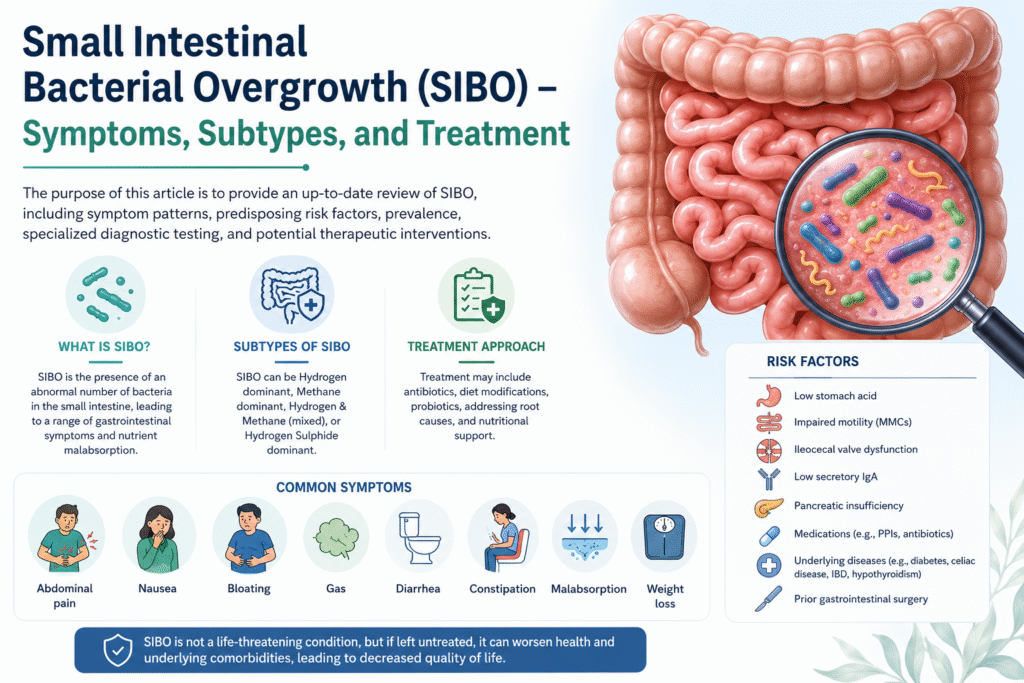
Small Intestinal Bacterial Overgrowth (SIBO) – Symptoms, Subtypes, and Treatment The purpose of this article is to provide an up-to-date review of SIBO, including symptom patterns, predisposing risk factors, prevalence, specialized diagnostic testing, and potential therapeutic interventions. What is SIBO? Small intestinal bacterial overgrowth (SIBO) is characterized by the presence of an abnormal number of bacteria in the small intestine together with a constellation of GI symptoms. The primary cause of SIBO is identified as increased permeability to lipopolysaccharides (LPSs), which trigger an inflammatory response and lead to chronic inflammation (28). However, it is important to remember that SIBO is just the tip of the iceberg—a dysfunction of many organs and a variety of diseases may contribute to excessive bacterial overgrowth and lead to SIBO (29). SIBO is characterized by increased colonization of anaerobic and aerobic microorganisms within the small intestine, predominantly Gram-negative species including Klebsiella pneumoniae, Escherichia coli, Streptococcus gramineus, Prevotella, Clostridium spp, and Methanobrevibactersmithii (30). Common gastrointestinal symptoms like abdominal pain, nausea, bloating, gas, diarrhea and/or constipation are considered the typical symptoms of dysbiosis, and consequently of SIBO as well (31). Moreover, these issues can result in malabsorption, leading to nutritional deficiencies (vitamin A, D, E, B12), hypoproteinemia, anemia and weight loss (32,33,34). While SIBO is not a life-threatening condition, it can worsen the patient’s health, and underlying comorbidities (35,36,37,38), leading to decreased quality of life. The gut microbiota serves as an incredible reservoir of microorganisms. Variations in the composition of the gut microbiota occur depending on the particular anatomical area being examined (39). These differences are chiefly influenced by factors like pH level and concentrations of oxygen. The greatest bacterial colonization occurs predominantly in the large intestine (40). The small intestine, under normal physiological conditions, is colonized by a specific number of microorganisms, from 104–5 CFU/mL in the proximal region to 107–8 CFU/mL in the distal part (41). However, when the host’s defense mechanisms are compromised (such as, gastric acid, MMCs, the ileocecal valve, secretory IgA, and pancreatic enzymes), bacterial translocation and overgrowth can occur in the small or large intestine (42,43,44). Small intestinal bacterial overgrowth (SIBO) and intestinal methanogen overgrowth (IMO) are two types of gut microbiota disruption (46). The overgrowth of bacteria in SIBO and IMO can be associated with the migration of bacteria from the upper aerodigestive tract or from the colon (47). Subtypes of SIBO Based on the predominant stool pattern and symptoms, IBS is divided into 4 main subtypes: Constipation-predominant (IBS-C or IMO), Diarrhea-predominant (IBS-D or SIBO), Mixed Constipation and Diarrhea (IBS-M), and Hydrogen Sulphide dominant. Hydrogen Dominant – Increased hydrogen gas (H2) on the breath test is linked to more symptoms of diarrhea (IBS-D) and is categorized as SIBO. It corelates with higher levels of Enterobacteriaceae domain (20). Methane Dominant – Increased methane gas (CH4) on the breath test is associated with symptoms of constipation (IBS-C) and is now categorized as IMO (Intestinal Methanogen overgrowth). It correlates with increased predominance of methanogens, including Methanobrevibacter smithii, as well as Methanosphaera stadtmanae and Methanomassiliicoccus luminyensis (20). Methanogens are not bacteria but are archaea, a third domain of life which lack cell nuclei and have distinct cell wall structures when compared with the other 2 domains, bacteria and eukarya (21). Within the gut, most methanogens are hydrogenotrophic, i.e., they use H2 generated by syntrophic bacterial species for the generation of methane (22). Interestingly, methane (CH4) is directly linked to slowing of intestinal transit in methane-producing IBS subjects (23) and may cause constipation (24). 3.Hydrogen and Methane Dominant (Mixed type) – Hydrogen–methane-dominant SIBO (H+/M+) presents with diverse symptoms ranging from abdominal pain, reflux, and stomach discomfort to fatigue (20). Mixed-type SIBO occurs when the small intestine has an overgrowth of bacteria that produce both hydrogen and methane gases. Because hydrogen-producers fuel methane-producers, the two often coexist. This causes fluctuating, mixed symptoms like alternating diarrhea and constipation, along with severe bloating (20). The findings by MJ et al. (20) suggest that increases in M. smithii and in bacterial H2S producers including Fusobacterium and Desulfovibrio species may contribute to the predominant constipation and diarrheal subtypes in IBS subjects, respectively; because both methane producers and H2S producing bacteria compete for hydrogen as their source of survival. 4.Hydrogen Sulphide Dominant – Hydrogen–sulfide-dominant SIBO (S+) is characterized by intense gas production in the small intestine that smells like rotten eggs. Increased H2S gas on a breath test is linked to increased prevalence of H2S producers, including Fusobacterium and Desulfovibrio species and corelates with symptoms of diarrhea (20). Increased levels of sulfate-reducing bacteria (which produce H2S) have been linked to colorectal cancer and ulcerative colitis (25,26), which is associated with persistent diarrhea (27). Symptoms of SIBO Symptoms of SIBO are nonspecific and include (1): Abdominal pain Belching Bloating Gas Diarrhea/constipation Abdominal distension Flatulence And indigestion The symptoms can overlap and vary in frequency, duration, and severity. Typically, over two-thirds of patients report the aforementioned symptoms (1). Conditions that predispose you to SIBO (Causes) (1) Achlorhydria or hypochlorhydria (No or low stomach acid due to chronic gastritis and long-term PPI use) Exocrine pancreatic insufficiency (absence of proteolytic enzymes, abnormal chyme in the small intestine lumen, motility disorders, administration of painkillers and ongoing alcohol consumption) Immunodeficiency syndromes (IgA deficiency, common variable immunodeficiency, AIDS and others) Small intestinal obstruction and stagnation (strictures, adhesions, tumors of the small bowel, Large and/or multiple duodenal and jejunal diverticula) Previous abdominal surgery (afferent loop syndrome after Billroth-II gastric resection, Roux-en-Y stasis syndrome, bariatric bypass surgery) Small intestinal pseudo-obstruction (due to endogenous ethanol production) and some neurological diseases (e.g. myotonic dystrophy, Parkinson disease, Chagasic enteropathy) Irritable bowel syndrome (IBS) – (with motor disturbance, visceral afferent hypersensitivity, psycho-social dysfunction) in which motility disorders enable “secondary” bacterial overgrowth Coeliac disease (The prevalence of SIBO is high, especially in patients who do not respond to a gluten-free diet and/or have lactose intolerance) Crohn’s disease (due to previous ileo-cecal resection and/or large entero-enteric and entero-colic fistulae) Short Bowel Syndrome (The loss of the ileo-cecal valve and the loss of the ileal break from resection of the distal small bowel would accelerate the transit of chyme throughout the entire gastrointestinal tract. Undigested food becomes a substrate for bacterial