
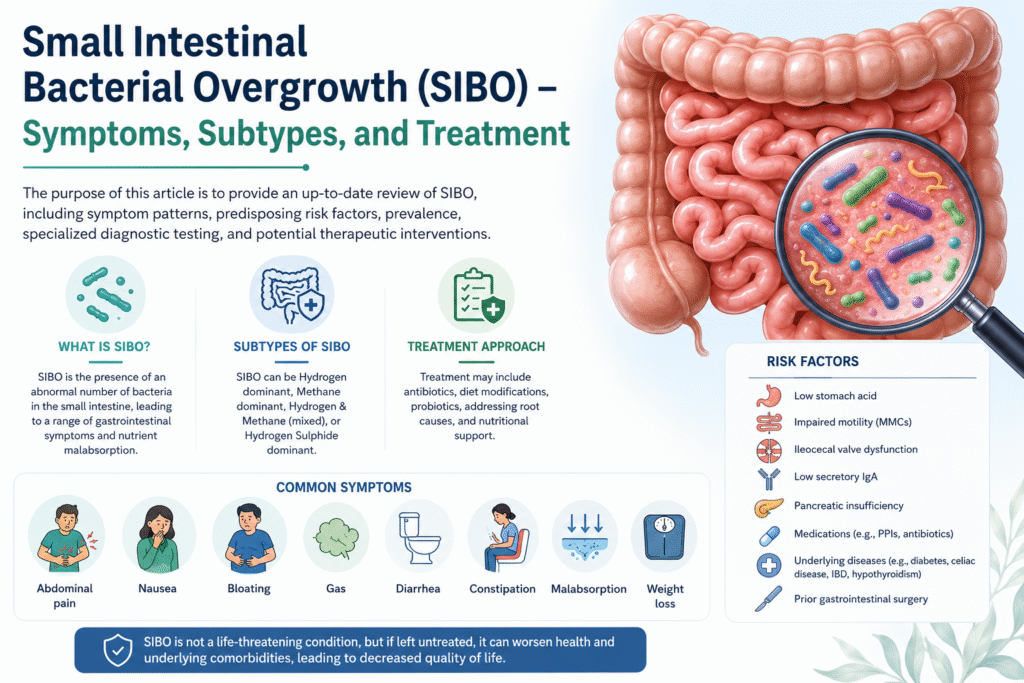
Small Intestinal Bacterial Overgrowth (SIBO) – Symptoms, Subtypes, and Treatment
The purpose of this article is to provide an up-to-date review of SIBO, including symptom patterns, predisposing risk factors, prevalence, specialized diagnostic testing, and potential therapeutic interventions.
What is SIBO?
Small intestinal bacterial overgrowth (SIBO) is characterized by the presence of an abnormal number of bacteria in the small intestine together with a constellation of GI symptoms. The primary cause of SIBO is identified as increased permeability to lipopolysaccharides (LPSs), which trigger an inflammatory response and lead to chronic inflammation (28). However, it is important to remember that SIBO is just the tip of the iceberg—a dysfunction of many organs and a variety of diseases may contribute to excessive bacterial overgrowth and lead to SIBO (29). SIBO is characterized by increased colonization of anaerobic and aerobic microorganisms within the small intestine, predominantly Gram-negative species including Klebsiella pneumoniae, Escherichia coli, Streptococcus gramineus, Prevotella, Clostridium spp, and Methanobrevibactersmithii (30).
Common gastrointestinal symptoms like abdominal pain, nausea, bloating, gas, diarrhea and/or constipation are considered the typical symptoms of dysbiosis, and consequently of SIBO as well (31).
Moreover, these issues can result in malabsorption, leading to nutritional deficiencies (vitamin A, D, E, B12), hypoproteinemia, anemia and weight loss (32,33,34). While SIBO is not a life-threatening condition, it can worsen the patient’s health, and underlying comorbidities (35,36,37,38), leading to decreased quality of life.
The gut microbiota serves as an incredible reservoir of microorganisms. Variations in the composition of the gut microbiota occur depending on the particular anatomical area being examined (39). These differences are chiefly influenced by factors like pH level and concentrations of oxygen. The greatest bacterial colonization occurs predominantly in the large intestine (40).
The small intestine, under normal physiological conditions, is colonized by a specific number of microorganisms, from 104–5 CFU/mL in the proximal region to 107–8 CFU/mL in the distal part (41). However, when the host’s defense mechanisms are compromised (such as, gastric acid, MMCs, the ileocecal valve, secretory IgA, and pancreatic enzymes), bacterial translocation and overgrowth can occur in the small or large intestine (42,43,44).
Small intestinal bacterial overgrowth (SIBO) and intestinal methanogen overgrowth (IMO) are two types of gut microbiota disruption (46). The overgrowth of bacteria in SIBO and IMO can be associated with the migration of bacteria from the upper aerodigestive tract or from the colon (47).
Subtypes of SIBO
Based on the predominant stool pattern and symptoms, IBS is divided into 4 main subtypes: Constipation-predominant (IBS-C or IMO), Diarrhea-predominant (IBS-D or SIBO), Mixed Constipation and Diarrhea (IBS-M), and Hydrogen Sulphide dominant.
- Hydrogen Dominant – Increased hydrogen gas (H2) on the breath test is linked to more symptoms of diarrhea (IBS-D) and is categorized as SIBO. It corelates with higher levels of Enterobacteriaceae domain (20).
- Methane Dominant – Increased methane gas (CH4) on the breath test is associated with symptoms of constipation (IBS-C) and is now categorized as IMO (Intestinal Methanogen overgrowth). It correlates with increased predominance of methanogens, including Methanobrevibacter smithii, as well as Methanosphaera stadtmanae and Methanomassiliicoccus luminyensis (20).
Methanogens are not bacteria but are archaea, a third domain of life which lack cell nuclei and have distinct cell wall structures when compared with the other 2 domains, bacteria and eukarya (21). Within the gut, most methanogens are hydrogenotrophic, i.e., they use H2 generated by syntrophic bacterial species for the generation of methane (22). Interestingly, methane (CH4) is directly linked to slowing of intestinal transit in methane-producing IBS subjects (23) and may cause constipation (24).
3.Hydrogen and Methane Dominant (Mixed type) – Hydrogen–methane-dominant SIBO (H+/M+) presents with diverse symptoms ranging from abdominal pain, reflux, and stomach discomfort to fatigue (20). Mixed-type SIBO occurs when the small intestine has an overgrowth of bacteria that produce both hydrogen and methane gases. Because hydrogen-producers fuel methane-producers, the two often coexist. This causes fluctuating, mixed symptoms like alternating diarrhea and constipation, along with severe bloating (20).
The findings by MJ et al. (20) suggest that increases in M. smithii and in bacterial H2S producers including Fusobacterium and Desulfovibrio species may contribute to the predominant constipation and diarrheal subtypes in IBS subjects, respectively; because both methane producers and H2S producing bacteria compete for hydrogen as their source of survival.
4.Hydrogen Sulphide Dominant – Hydrogen–sulfide-dominant SIBO (S+) is characterized by intense gas production in the small intestine that smells like rotten eggs. Increased H2S gas on a breath test is linked to increased prevalence of H2S producers, including Fusobacterium and Desulfovibrio species and corelates with symptoms of diarrhea (20). Increased levels of sulfate-reducing bacteria (which produce H2S) have been linked to colorectal cancer and ulcerative colitis (25,26), which is associated with persistent diarrhea (27).
Symptoms of SIBO
Symptoms of SIBO are nonspecific and include (1):
- Abdominal pain
- Belching
- Bloating
- Gas
- Diarrhea/constipation
- Abdominal distension
- Flatulence
- And indigestion
The symptoms can overlap and vary in frequency, duration, and severity. Typically, over two-thirds of patients report the aforementioned symptoms (1).
Conditions that predispose you to SIBO (Causes) (1)
- Achlorhydria or hypochlorhydria (No or low stomach acid due to chronic gastritis and long-term PPI use)
- Exocrine pancreatic insufficiency (absence of proteolytic enzymes, abnormal chyme in the small intestine lumen, motility disorders, administration of painkillers and ongoing alcohol consumption)
- Immunodeficiency syndromes (IgA deficiency, common variable immunodeficiency, AIDS and others)
- Small intestinal obstruction and stagnation (strictures, adhesions, tumors of the small bowel, Large and/or multiple duodenal and jejunal diverticula)
- Previous abdominal surgery (afferent loop syndrome after Billroth-II gastric resection, Roux-en-Y stasis syndrome, bariatric bypass surgery)
- Small intestinal pseudo-obstruction (due to endogenous ethanol production) and some neurological diseases (e.g. myotonic dystrophy, Parkinson disease, Chagasic enteropathy)
- Irritable bowel syndrome (IBS) – (with motor disturbance, visceral afferent hypersensitivity, psycho-social dysfunction) in which motility disorders enable “secondary” bacterial overgrowth
- Coeliac disease (The prevalence of SIBO is high, especially in patients who do not respond to a gluten-free diet and/or have lactose intolerance)
- Crohn’s disease (due to previous ileo-cecal resection and/or large entero-enteric and entero-colic fistulae)
- Short Bowel Syndrome (The loss of the ileo-cecal valve and the loss of the ileal break from resection of the distal small bowel would accelerate the transit of chyme throughout the entire gastrointestinal tract. Undigested food becomes a substrate for bacterial fermentation)
- Alcoholic (AFLD) or Non-alcoholic steatohepatitis (NASH)/Non-alcoholic Fatty liver (NAFLD)
- Liver cirrhosis (small intestinal motility disorder, especially slow transit in advanced liver disease)
- Scleroderma (System Sclerosis) – Severe small bowel involvement by scleroderma can present as chronic intestinal pseudo-obstruction and SIBO
- Autonomic neuropathy in diabetes mellitus
- Radiation enteropathy (SIBO and lactose intolerance may occur during and/or after abdominal) radiotherapy
Conditions associated with SIBO
Besides IBS, conditions that have been associated with SIBO include:
- Inflammatory bowel disease (IBD)
- Dyspepsia
- Rosacea
- Restless legs syndrome
- Small bowel diverticula
- Pancreatitis
- Hypothyroidism
- Parkinson’s disease
- Diabetes
- Fibromyalgia
- Coronary artery disease, and
- Abdominal surgery (e.g., hysterectomy, gastrectomy, cholecystectomy, and colectomy). However, the prevalence of SIBO in patients with these associated conditions is highly variable (range, 4%–79%) (2).
Diagnostics Tests for SIBO
- Hydrogen and Methane Breath Testing
Breath testing is considered a safe, patient friendly and non-invasive diagnostic tool for SIBO. The diagnostic role of hydrogen breath tests largely depends on the type of substrate used. Glucose and lactulose are the 2 main substrates used for breath testing for SIBO and IMO, and each test type has distinct advantages and disadvantages (17).
The North American consensus for breath testing recommends administering 75 g of glucose or 10 g of lactulose, taken with or followed by 1 cup of water; breath testing should measure hydrogen, methane, and carbon dioxide (2,15). An increase in hydrogen concentrations of ≥20 ppm from baseline within 90 minutes (2,15,18) and an increase from baseline in methane concentrations of ≥10 ppm within 2 hours is considered diagnostic of SIBO (2,15,18).
- Hydrogen-dominant SIBO (H+): H2 > 20 ppm from the baseline within 90 min, CH4 < 10 ppm any time during the test;
- Methane-dominant SIBO (M+): H2 < 20 ppm from the baseline within 90 min, CH4 >10 ppm any time during the test;
- Hydrogen–methane-dominant SIBO (H+/M+): H2 > 20 ppm from the baseline within 90 min, CH4 > 10 ppm any time during the test.
In current clinical practice, Lactulose breath test (LBT) and Glucose breath test (GBT) are extensively used by various healthcare professionals for diagnosing SIMO (SIBO and IMO), primarily due to their availability, safety, and cost-effectiveness (15). However, the choice of test often remains at the discretion of the prescriber.
Glucose hydrogen breath testing (GHBT) has been shown to be more specific but less sensitive, yielding a higher rate of false-negatives and a lower rate of false-positives. The specificity and sensitivity of the GHBT range anywhere from 78% – 97% and 15.7% – 62%, respectively (14). Because orally administered glucose is avidly absorbed by the human small intestine and does not normally reach the distal small intestine or colon, a positive GBT likely represents SIBO affecting the stomach or proximal small bowel. However, a negative GBT cannot exclude SIBO affecting the distal small bowel. From a practical standpoint, this means that the GBT favors specificity over sensitivity (13).
On the other hand, lactulose testing is more sensitive but less specific, with a reported sensitivity of 31% – 68% and specificity of 65% – 97.9% (14). This is
because ingested lactulose is non-absorbed, it theoretically should be able to detect bacterial fermentation anywhere along the length of the small intestine. Unfortunately, in the absence of SIBO, lactulose always reaches the colon, where it is fermented by resident bacteria. So, from a practical standpoint, the LBT favors sensitivity over specificity (13).
Therefore, providers who choose the LBT have accepted the higher rate of false-positive test results and the consequent overtreating of their patients for SIBO. Those choosing the GBT have accepted the opposite calculus: the possibility of a higher rate of false-negative results, which could cause some affected patients to not be treated for SIBO.
Differentiating between SIBO and IMO is critical for selecting appropriate treatment. IMO often requires combination antibiotic therapy, most notably neomycin and rifaximin (12,16), while SIBO can typically be managed with monotherapy, usually rifaximin (12,15).
2.Small-Bowel (duodenum/jejunum) Aspiration and Quantitative culture
Small bowel culture is widely accepted as the “best diagnostic method” for establishing a diagnosis of SIBO (2,15); a threshold of ≥103 cfu/mL is recommended as a positive test result for SIBO, especially when performing duodenal aspirate and culture, because of very low bacterial counts in this more acidic environment (2,15). However, some investigators have suggested a higher threshold of ≥105 cfu/mL based on traditional microbiological standards for bacterial infection and for jejunal culture (19).
However, this procedure requires a gastroenterologist to perform an upper endoscopy (EGD) to take a fluid sample directly from the small intestine (duodenum or jejunum) and test it for bacterial counts.
Therefore, the high cost of the procedure, combined with its invasive nature, has made it less than ideal for many patients. Furthermore, limitations of the procedure, including varying bacterial concentrations along with the small bowel and possible risk of contamination from oral flora, make it impractical for routine clinical use. Also, it is important to note that a high percentage of the bacteria colonizing the gut cannot be cultured and that patchy distribution of bacteria along with the small bowel prevents accurate quantification of bacterial overgrowth (2,15).
Treatment for SIBO
The effective treatment includes eradication of bacteria through antibiotics, addressing underlying predisposing conditions and nutrient deficiencies, and prevention of SIBO (6).
Eradicating overgrowth of bacteria is typically achieved by treatment with:
- Pharmaceutical Antibiotics which include – Rifaximin and Metronidazole
- Herbal Antimicrobials which include 2 types:
- Candibactins AR and BR by Metagenics
- FC-Cidal and Dysbiocide by Biotics Research
- Under pharmaceutical antibiotics – Rifaximin (nonsystemic antibiotic) is currently the most studied agent for patients with SIBO, with numerous studies demonstrating its efficacy in eradication of SIBO. Rifaximin is a poorly absorbed antibiotic that has been largely used to treat SIBO over the past decades (6,7,8). Both experimental and clinical pharmacology clearly show that this compound displays a broad spectrum of antibacterial activity, covering Gram‐positive and Gram‐negative organisms, both aerobic and anaerobic (6,7,8). Being virtually non‐absorbed, its bioavailability within the gastrointestinal tract is rather higher against a wide range of pathogenic organism. Furthermore, it has been found that rifaximin is able to preserve colonic flora and increase the relative abundance of Lactobacilli and Bifidobacteria, showing ‘eubiotic’ effects (6,9,10).
A systematic review and meta-analysis of rifaximin (dose range: 600–1600 mg/d; duration of treatment: 5–28 days) reported that SIBO was eradicated (determined by glucose or lactulose breath testing) in 70.8% of patients (26 studies; 95% CI, 61.4–78.2) (6).
Another antibiotic commonly used with Rifaximin is Metronidazole. It is a systemic antibiotic (with others being Ciprofloxacin, Norfloxacin, Neomycin, Chlortetracycline etc.). These have also been used in eradication of SIBO as determined by either the breath test or bacterial culture (3,6). A meta-analysis of 10 prospective clinical studies of nonsystemic antibiotics in patients with SIBO reported higher rates for breath test normalization with an antibiotic vs placebo (51.1% vs 9.8%, respectively; effectiveness ratio, 2.6; 95% CI, 1.3–5.0; P = 0.03) (3).
Normalization of the breath test with metronidazole, a systemic agent (n = 86), was observed in 51.2% of patients (3). Finally, 70% of patients with SIBO and brain fogginess who received different antibiotics reported significant improvement of SIBO symptoms (P = 0.005), and 85% achieved complete resolution of brain fogginess (P = 0.05) (11).
Another study by Mark et al. (4) concluded that among patients who had IBS without constipation, treatment with rifaximin for 2 weeks provided significant relief of IBS symptoms, bloating, abdominal pain, and loose or watery stools.
2.Herbal Antimicrobials – Victor et al. (5) compared the efficacy of herbal antimicrobials to pharmaceutical antibiotics – rifaximin. The study demonstrated that herbal therapy may be as effective as antibiotic therapy in the treatment of SIBO, as indirectly measured by normalization of the lactulose breath test abnormalities.
In the study (5), 104 patients were provided the option of two treatment arms as per the patients’ choice and underwent post-treatment Lactulose Breath Test. Rifaximin was completed by 67 patients, and 37 completed herbal therapy.
The dosages were – either two 200 mg rifaximin tablets three times daily (TID) or 2 capsules twice daily of the following commercial herbal preparations; Dysbiocide and FC Cidal (Biotics Research Laboratories, Rosenberg, Texas) or Candibactin-AR and Candibactin-BR (Metagenics, Inc, Aliso Viejo, California) for 4 consecutive weeks immediately followed by a repeat LBT.
Of the 37 patients who received herbal therapy, 17 (46%) had a negative follow-up LBT compared to 23/67 (34%) of rifaximin users (P=.24). The odds ratio of having a negative LBT after taking herbal therapy as compared to rifaximin was 1.85 (CI=0.77-4.41, P=.17) once adjusted for age, gender, SIBO risk factors and IBS status. Fourteen of the 44 (31.8%) rifaximin non-responders were offered herbal rescue therapy, with 8 of the 14 (57.1%) having a negative LBT after completing the rescue herbal therapy, while 10 non-responders were offered triple antibiotics (clindamycin 300 mg TID, metronidazole 250 mg TID, neomycin 500 mg TID). 6 of the 10 (60%) had a negative LBT after completing the rescue herbal therapy (5).
Thus, the study concluded that in the setting of SIBO, patients can be given the choice of antibiotic or herbal therapy depending on their individual preference with similar response rates and safety profiles. In addition, patients who are refractory to rifaximin can receive herbal therapy as a potential rescue therapy with equivalent results to triple antibiotics (5).
However, some patients may remain symptomatic despite treatment, suggesting that other underlying conditions (e.g., dysmotility and PPI use) may potentially be the cause of symptoms and/or the bacteria may be antibiotic resistant (47).
Therefore, treatment with antibiotics alone does not fully address the microbial dysbiosis associated with SIBO, since antibiotics do not restore normal flora (48).
Probiotics are believed to have beneficial effects on the gut microbiota. However, few clinical studies have examined this option; furthermore, these studies lack consistency not only in the formulations used but also in the duration of treatment, populations assessed, and methods of diagnosing SIBO (49,50).
More recently, a 2017 meta-analysis of 18 studies reported that probiotics were associated with significantly increased clearance of SIBO compared with non-probiotic therapy (6 studies; relative risk, 1.6; 95% CI, 1.2–2.2), although probiotics were not found to be efficacious for the prevention of SIBO (51). Furthermore, probiotics may inadvertently colonize the small bowel, causing both SIBO and D-Lactic Acidosis, as well as brain fogginess (11). Some experts consider these findings to be controversial (52).
Recurrent SIBO
Approximately 44% of patients with SIBO may experience a relapse of symptoms within 9 months of initial treatment (53). For these patients, the most effective way to achieve eradication is by first identifying the appropriate organism(s) and providing targeted antibiotic therapy (i.e., “the right drug for the right bug” approach). This is best achieved by small bowel aspiration, culture, and sensitivity. Another strategy is to identify and correct any underlying condition(s), such as avoiding medications that delay gut transit, reduce PPI and opioid use, and improve glycemic control, and adhesiolysis or correction of blind loops (54,57). Prokinetic and laxative agents improve motility and could enhance antegrade clearance of bacteria (56).
Some factors are not reversible, such as radiation enteritis, systemic sclerosis, post-gastric resection, and surgical resection of the ileocecal valve (54,55). In such patients, some experts recommend cyclical monthly low-dose antibiotic therapy using 2 or 3 antibiotics (54,55).
Treatment Failure
Approximately 30%–40% of patients may not have resolution of SIBO symptoms with antibiotic trials (2). In such cases, other overlapping or alternate diagnosis should be considered, such as disaccharide deficiency or food intolerances (2,58,59). For example, a patient with SIBO and lactose intolerance could present with symptoms of gas, bloating, and diarrhea; antibiotics will only confer partial resolution of symptoms. In addition, the patient will require a lactose-free diet.
Moreover, other overlapping conditions such as pancreatic exocrine insufficiency, bile acid malabsorption, hormonal over secretion, medications, functional bloating, hypersensitivity, candida overgrowth, and factitious symptoms (like intentional creation, falsification, or exaggeration of physical or mental health problems) should all be considered as possible causes. Therefore, a comprehensive assessment of symptoms with appropriate diagnostic tests (GI map test or Oats test) and careful exclusion of other conditions (like insensitivities to dairy, nightshades, histamines etc.) is important in a patient with risk factors or in those with suboptimal response to therapy (2).
References
- Bures J, Cyrany J, Kohoutova D, Förstl M, Rejchrt S, Kvetina J, Vorisek V, Kopacova M. Small intestinal bacterial overgrowth syndrome. World J Gastroenterol. 2010 Jun 28;16(24):2978-90. doi: 10.3748/wjg.v16.i24.2978. PMID: 20572300; PMCID: PMC2890937.
- Rao SSC, Bhagatwala J. Small Intestinal Bacterial Overgrowth: Clinical Features and Therapeutic Management. Clin Transl Gastroenterol. 2019 Oct;10(10):00078. doi: 10.14309/ctg.0000000000000078. PMID: 31584459; PMCID: PMC6884350.
- Shah SC, Day LW, Somsouk M, Sewell JL. Meta-analysis: antibiotic therapy for small intestinal bacterial overgrowth. Aliment Pharmacol Ther. 2013 Oct;38(8):925-34. doi: 10.1111/apt.12479. Epub 2013 Sep 4. PMID: 24004101; PMCID: PMC3819138.
- Mark Pimentel, M.D., Anthony Lembo, M.D., William D. Chey, M.D., Salam Zakko, M.D., Yehuda Ringel, M.D., Jing Yu, Ph.D., Shadreck M. Mareya, Ph.D., Audrey L. Shaw, Ph.D., Enoch Bortey, Ph.D., and William P. Forbes, Pharm.D., for the TARGET Study Group. Rifaximin Therapy for Patients with Irritable Bowel Syndrome without Constipation. Published January 6, 2011 N Engl J Med 2011;364:22-32 DOI: 10.1056/NEJMoa1004409 VOL. 364 NO. 1 Copyright © 2011
- Chedid V, Dhalla S, Clarke JO, Roland BC, Dunbar KB, Koh J, Justino E, Tomakin E, Mullin GE. Herbal therapy is equivalent to rifaximin for the treatment of small intestinal bacterial overgrowth. Glob Adv Health Med. 2014 May;3(3):16-24. doi: 10.7453/gahmj.2014.019. PMID: 24891990; PMCID: PMC4030608.
- Gatta L, Scarpignato C. Systematic review with meta-analysis: rifaximin is effective and safe for the treatment of small intestine bacterial overgrowth. Aliment Pharmacol Ther. 2017 Mar;45(5):604-616. doi: 10.1111/apt.13928. Epub 2017 Jan 12. PMID: 28078798; PMCID: PMC5299503.
- Scarpignato C, Pelosini I. Rifaximin, a poorly absorbed antibiotic: pharmacology and clinical potential. Chemotherapy 2005; 51(Suppl. 1): 36–66. [DOI] [PubMed] [Google Scholar]
- Calanni F, Renzulli C, Barbanti M, Viscomi GC. Rifaximin: beyond the traditional antibiotic activity. J Antibiot 2014; 67: 667–70. [DOI] [PubMed] [Google Scholar]
- Maccaferri S, Vitali B, Klinder A, et al Rifaximin modulates the colonic microbiota of patients with Crohn’s disease: an in vitro approach using a continuous culture colonic model system. J Antimicrob Chemother 2010; 65: 2556–65. [DOI] [PubMed] [Google Scholar]
- Ponziani FR, Scaldaferri F, Petito V, et al Rifaximin treatment increases lactobacillus abundance in patients with different gastrointestinal and liver diseases. UEG Journal 2015; 3(5S): A138. [Google Scholar]
- Rao SSC, Rehman A, Yu S, et al. Brain fogginess, gas and bloating: A link between SIBO, probiotics and metabolic acidosis. Clin Transl Gastroenterol 2018;9:162. [DOI] [PMC free article] [PubMed] [Google Scholar]
- Scalese G, Spina L, Gallucci L, Cesarini A, Ribichini E, Diofebi M, Tattoli I, Pallotta L, Citarella A, Severi C. Diagnostic Evaluation of Small Intestinal Microbial Overgrowth: A Cross-Sectional Comparison of Glucose and Lactulose Breath Tests. J Clin Med. 2025 Dec 17;14(24):8920. doi: 10.3390/jcm14248920. PMID: 41464822; PMCID: PMC12734151.
- Saad R, Chey W. Breath Testing for Small Intestinal Bacterial Overgrowth: Maximizing Test Accuracy. Clinical Gastroenterology and Hepatology, 2013; 12, 1964-1972
- Achufusi TGO, Sharma A, Zamora EA, Manocha D. Small Intestinal Bacterial Overgrowth: Comprehensive Review of Diagnosis, Prevention, and Treatment Methods. Cureus. 2020 Jun 27;12(6):e8860. doi: 10.7759/cureus.8860. Erratum in: Cureus. 2025 Jul 3;17(7):c227. doi: 10.7759/cureus.c227. PMID: 32754400; PMCID: PMC7386065.
- Rezaie A., Buresi M., Lembo A., Lin H., McCallum R., Rao S., Schmulson M., Valdovinos M., Zakko S., Pimentel M. Hydrogen and Methane-Based Breath Testing in Gastrointestinal Disorders: The North American Consensus. Am. J. Gastroenterol. 2017;112:775–784. doi: 10.1038/ajg.2017.46. [DOI] [PMC free article] [PubMed] [Google Scholar]
- Mehravar S., Takakura W., Wang J., Pimentel M., Nasser J., Rezaie A. Symptom Profile of Patients with Intestinal Methanogen Overgrowth: A Systematic Review and Meta-Analysis. Clin. Gastroenterol. Hepatol. Off. Clin. Pract. J. Am. Gastroenterol. Assoc. 2025;23:1111–1122.e9. doi: 10.1016/j.cgh.2024.07.020. [DOI] [PubMed] [Google Scholar]
- Lim J, Rezaie A. Pros and Cons of Breath Testing for Small Intestinal Bacterial Overgrowth and Intestinal Methanogen Overgrowth. Gastroenterol Hepatol (N Y). 2023 Mar;19(3):140-146. PMID: 37706108; PMCID: PMC10496284.
- Erdogan A, Lee YY, Badger C, et al. What is the optimal threshold for an increase in hydrogen and methane levels with glucose breath test (GBT) for detection of small intestinal bacterial overgrowth (SIBO)? Gastroenterology 2014;146:S–532. [Google Scholar]
- Posserud I, Stotzer PO, Björnsson ES, et al. Small intestinal bacterial overgrowth in patients with irritable bowel syndrome. Gut 2007;56:802–8. [DOI] [PMC free article] [PubMed] [Google Scholar]
- Villanueva-Millan MJ, Leite G, Wang J, Morales W, Parodi G, Pimentel ML, Barlow GM, Mathur R, Rezaie A, Sanchez M, Ayyad S, Cohrs D, Chang C, Rashid M, Hosseini A, Fiorentino A, Weitsman S, Chuang B, Chang B, Pichetshote N, Pimentel M. Methanogens and Hydrogen Sulfide Producing Bacteria Guide Distinct Gut Microbe Profiles and Irritable Bowel Syndrome Subtypes. Am J Gastroenterol. 2022 Dec 1;117(12):2055-2066. doi: 10.14309/ajg.0000000000001997. Epub 2022 Sep 6. PMID: 36114762; PMCID: PMC9722381.
- Woese CR, Kandler O, Wheelis ML. Towards a natural system of organisms: Proposal for the domains archaea, bacteria, and eucarya. Proc Natl Acad Sci USA 1990;87:4576–9. [DOI] [PMC free article] [PubMed] [Google Scholar]
- Gaci N, Borrel G, Tottey W, et al. Archaea and the human gut: New beginning of an old story. World J Gastroenterol 2014;20:16062–78. [DOI] [PMC free article] [PubMed] [Google Scholar]
- Pimentel M, Lin HC, Enayati P, et al. Methane, a gas produced by enteric bacteria, slows intestinal transit and augments small intestinal contractile activity. Am J Physiol Gastrointest Liver Physiol 2006;290:G1089–95. [DOI] [PubMed] [Google Scholar]
- Kunkel D, Basseri RJ, Makhani MD, et al. Methane on breath testing is associated with constipation: A systematic review and meta-analysis. Dig Dis Sci 2011;56:1612–8. [DOI] [PubMed] [Google Scholar]
- Levine J, Ellis CJ, Furne JK, et al. Fecal hydrogen sulfide production in ulcerative colitis. Am J Gastroenterol 1998;93:83–7. [DOI] [PubMed] [Google Scholar]
- Pitcher MC, Beatty ER, Cummings JH. The contribution of sulphate reducing bacteria and 5-aminosalicylic acid to faecal sulphide in patients with ulcerative colitis. Gut 2000;46:64–72. [DOI] [PMC free article] [PubMed] [Google Scholar]
- Feuerstein JD, Moss AC, Farraye FA. Ulcerative colitis. Mayo Clin Proc 2019;94:1357–73. [DOI] [PubMed] [Google Scholar]
- Sroka N., Rydzewska-Rosołowska A., Kakareko K., Rosołowski M., Głowińska I., Hryszko T. Show Me What You Have Inside—The Complex Interplay between SIBO and Multiple Medical Conditions—A Systematic Review. Nutrients. 2023;15:90. doi: 10.3390/nu15010090. [DOI] [PMC free article] [PubMed] [Google Scholar]
- Bushyhead D., Quigley E.M.M. Small Intestinal Bacterial Overgrowth—Pathophysiology and Its Implications for Definition and Management. Gastroenterology. 2022;163:593–607. doi:10.1053/j.gastro.2022.04.002. [DOI] [PubMed] [Google Scholar]
- Rizos E., Pyleris E., Pimentel M., Triantafyllou K., Giamarellos-Bourboulis E.J. Small Intestine Bacterial Overgrowth Can Form an Indigenous Proinflammatory Environment in the Duodenum: A Prospective Study. Microorganisms. 2022;10:960. doi: 10.3390/microorganisms10050960. [DOI] [PMC free article] [PubMed] [Google Scholar]
- Wei L., Singh R., Ro S., Ghoshal U.C. Gut Microbiota Dysbiosis in Functional Gastrointestinal Disorders: Underpinning the Symptoms and Pathophysiology. JGH Open. 2021;5:976–987. doi: 10.1002/jgh3.12528. [DOI] [PMC free article] [PubMed] [Google Scholar]
- Losurdo G., Leandro G., Ierardi E., Perri F., Barone M., Principi M., Di Leo A. Breath Tests for the Non-Invasive Diagnosis of Small Intestinal Bacterial Overgrowth: A Systematic Review with Meta-Analysis. J. Neurogastroenterol. Motil. 2020;26:16–28. doi: 10.5056/jnm19113. [DOI] [PMC free article] [PubMed] [Google Scholar]
- Adike A., DiBaise J.K. Small Intestinal Bacterial Overgrowth: Nutritional Implications, Diagnosis, and Management. Gastroenterol. Clin. N. Am. 2018;47:193–208. doi: 10.1016/j.gtc.2017.09.008. [DOI] [PubMed] [Google Scholar]
- Shah A., Talley N.J., Holtmann G. Current and Future Approaches for Diagnosing Small Intestinal Dysbiosis in Patients with Symptoms of Functional Dyspepsia. Front. Neurosci. 2022;16:830356. doi: 10.3389/fnins.2022.830356. [DOI] [PMC free article] [PubMed] [Google Scholar]
- Shah A., Morrison M., Burger D., Martin N., Rich J., Jones M., Koloski N., Walker M.M., Talley N.J., Holtmann G.J. Systematic Review with Meta-Analysis: The Prevalence of Small Intestinal Bacterial Overgrowth in Inflammatory Bowel Disease. Aliment. Pharmacol. Ther. 2019;49:624–635. doi: 10.1111/apt.15133. [DOI] [PubMed] [Google Scholar]
- Ghoshal U.C., Shukla R., Ghoshal U. Small Intestinal Bacterial Overgrowth and Irritable Bowel Syndrome: A Bridge between Functional Organic Dichotomy. Gut Liver. 2017;11:196–208. doi: 10.5009/gnl16126. [DOI] [PMC free article] [PubMed] [Google Scholar]
- Losurdo G., D’abramo F.S., Indellicati G., Lillo C., Ierardi E., Di Leo A. The Influence of Small Intestinal Bacterial Overgrowth in Digestive and Extra-Intestinal Disorders. Int. J. Mol. Sci. 2020;21:3531. doi: 10.3390/ijms21103531. [DOI] [PMC free article] [PubMed] [Google Scholar]
- Ierardi E., Losurdo G., Sorrentino C., Giorgio F., Rossi G., Marinaro A., Romagno K.R., Di Leo A., Principi M. Macronutrient Intakes in Obese Subjects with or without Small Intestinal Bacterial Overgrowth: An Alimentary Survey. Scand. J. Gastroenterol. 2016;51:277–280. doi: 10.3109/00365521.2015.1086020. [DOI] [PubMed] [Google Scholar]
- Yamamura R., Inoue K.Y., Nishino K., Yamasaki S. Intestinal and Fecal PH in Human Health. Front. Microbiomes. 2023;2:1192316. doi: 10.3389/frmbi.2023.1192316. [DOI] [Google Scholar]
- Avelar Rodriguez D., Ryan P.M.D., Toro Monjaraz E.M., Ramirez Mayans J.A., Quigley E.M. Small Intestinal Bacterial Overgrowth in Children: A State-of-the-Art Review. Front. Pediatr. 2019;7:363. doi: 10.3389/fped.2019.00363. [DOI] [PMC free article] [PubMed] [Google Scholar]
- Kastl A.J., Terry N.A., Wu G.D., Albenberg L.G. The Structure and Function of the Human Small Intestinal Microbiota: Current Understanding and Future Directions. Cell. Mol. Gastroenterol. Hepatol. 2020;9:33–45. doi: 10.1016/j.jcmgh.2019.07.006. [DOI] [PMC free article] [PubMed] [Google Scholar]
- Ginnebaugh B., Chey W.D., Saad R. Small Intestinal Bacterial Overgrowth: How to Diagnose and Treat (and Then Treat Again) Gastroenterol. Clin. N. Am. 2020;49:571–587. doi: 10.1016/j.gtc.2020.04.010. [DOI] [PubMed] [Google Scholar]
- Schlechte J., Skalosky I., Geuking M.B., McDonald B. Long-Distance Relationships—Regulation of Systemic Host Defense against Infections by the Gut Microbiota. Mucosal Immunol. 2022;15:809–818. doi: 10.1038/s41385-022-00539-2. [DOI] [PubMed] [Google Scholar]
- Iacob S., Iacob D.G., Luminos L.M. Intestinal Microbiota as a Host Defense Mechanism to Infectious Threats. Front. Microbiol. 2019;9:3328. doi: 10.3389/fmicb.2018.03328. [DOI] [PMC free article] [PubMed] [Google Scholar]
- Takakura W., Pimentel M. Small Intestinal Bacterial Overgrowth and Irritable Bowel Syndrome—An Update. Front. Psychiatry. 2020;11:664. doi: 10.3389/fpsyt.2020.00664. [DOI] [PMC free article] [PubMed] [Google Scholar]
- Skrzydło-Radomańska B., Cukrowska B. How to Recognize and Treat Small Intestinal Bacterial Overgrowth? J. Clin. Med. 2022;11:6017. doi:10.3390/jcm11206017. [DOI] [PMC free article] [PubMed] [Google Scholar]
- Shah SC, Day LW, Somsouk M, et al. Meta-analysis: Antibiotic therapy for small intestinal bacterial overgrowth. Aliment Pharmacol Ther 2013;38:92534. [DOI] [PMC free article] [PubMed] [Google Scholar]
- Furnari M, Parodi A, Gemignani L, Giannini EG, Marenco S, Savarino E, et al. Clinical trial: The combination of rifaximin with partially hydrolysed guar gum is more effective than rifaximin alone in eradicating small intestinal bacterial overgrowth. Aliment Pharmacol Ther. 2010;32(8):1000–1006. doi:10.1111/j.1365-2036.2010.04436.x. [DOI] [PubMed] [Google Scholar]
- Kwak DS, Jun DW, Seo JG, et al. Short-term probiotic therapy alleviates small intestinal bacterial overgrowth, but does not improve intestinal permeability in chronic liver disease. Eur J Gastroenterol Hepatol 2014;26:1353–9. [DOI] [PubMed] [Google Scholar]
- Stotzer PO, Blomberg L, Conway PL, et al. Probiotic treatment of small intestinal bacterial overgrowth by Lactobacillus fermentum KLD. Scand JInfect Dis 1996;28:615–9. [DOI] [PubMed] [Google Scholar]
- Zhong C, Qu C, Wang B, et al. Probiotics for preventing and treating small intestinal bacterial overgrowth: A meta-analysis and systematic review of current evidence. J Clin Gastroenterol 2017;51:300–11. [DOI] [PubMed] [Google Scholar]
- Quigley EMM, Pot B, Sanders ME. “Brain fogginess” and D-lactic acidosis: Probiotics are not the cause. Clin Transl Gastroenterol 2018;9:187. [DOI][PMC free article] [PubMed] [Google Scholar]
- Lauritano EC, Gabrielli M, Scarpellini E, et al. Small intestinal bacterial overgrowth recurrence after antibiotic therapy. Am J Gastroenterol 2008;103:2031–5. [DOI] [PubMed] [Google Scholar]
- Sachdev AH, Pimentel M. Gastrointestinal bacterial overgrowth: Pathogenesis and clinical significance. Ther Adv Chronic Dis 2013;4:223–31. [DOI] [PMC free article] [PubMed] [Google Scholar]
- Pittman N, Rawn SM, Wang M, et al. Treatment of small intestinal bacterial overgrowth in systemic sclerosis: A systematic review. Rheumatology (Oxford) 2018;57:1802–11. [DOI] [PubMed] [Google Scholar]
- Madrid AM, Hurtado C, Venegas M, et al. Long-term treatment with cisapride and antibiotics in liver cirrhosis: Effect on small intestinal motility, bacterial overgrowth, and liver function. Am J Gastroenterol 2001;96:12515. [DOI] [PubMed] [Google Scholar]
- Jacobs C, Coss Adame E, Attaluri A, et al. Dysmotility and proton pump inhibitor use are independent risk factors for small intestinal bacterial and/or fungal overgrowth. Aliment Pharmacol Ther 2013;37:1103–11. [DOI] [PMC free article] [PubMed] [Google Scholar]
- Viswanathan L, Larion S, Shaffer N, et al. How useful is histological testing of disaccharidase deficiency in the evaluation of unexplained GI symptoms in adults? AGA Abstracts 2017;152:S7–S8. [Google Scholar]
- Philpott H, Yu S, Rao S. Letter to the editor: It’s all in the mix: Diagnosis and management of food intolerance. Clin Gastro Hepatol 2016;14:1221–4. [DOI] [PubMed] [Google Scholar]