According to Ayurveda, each one of us are born with a certain body constitution known as Prakruti. When we deviate from our natural constitution (due to stress, unhealthy diet, poor lifestyle, medicines etc.), we attract diseases. The diseased state or an imbalance in our energies is known as Dosha or Vikruti.
In Ayurveda there are 3 types of Doshas or body types – Vata, Pitta and Kapha.
In this article we are going to discuss the Pitta Dosha!
Our body is made up of 5 elements air, water, earth, fire and ether.
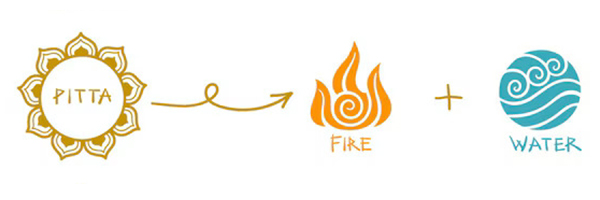
Pitta dosha – is principally a combination of Fire and Water elements. The word Pitta is derived from the Sanskrit word “tap” meaning to heat and to be austere; and “translates as that which cooks.”
It is the energy of digestion and metabolism in the body that functions through carrier substances such as organic acids, hormones, enzymes, bile and even the neurotransmitters and neuropeptides involved in thinking. Literally everything that enters the body needs to be “digested or cooked” from the sight of a full moon to a strawberry popped into the mouth. Some of pitta’s responsibilities are regulating the body heat through chemical transformation of food and giving a person appetite, vitality, learning and understanding.
The qualities of Pitta are – Hot, sharp, oily, light, moving or spreading, liquid and acidic. A pitta individual will display physical and mental characteristics that reflect these qualities in both balanced and imbalanced state.
Physiologically, Pitta provides the body with heat and energy through the breakdown of complex food molecules. It governs all processes related to conversion and transformation throughout the mind and body.
Psychologically, Pitta governs joy, courage, willpower, anger, jealousy, and mental perception. It also provides the radiant light of the intellect.
The main seat of Pitta in the body is the small intestine. It’s also located in stomach, liver, spleen, pancreas, blood, eyes, skin and sweat.
Why Knowing the “Seat” Matters?
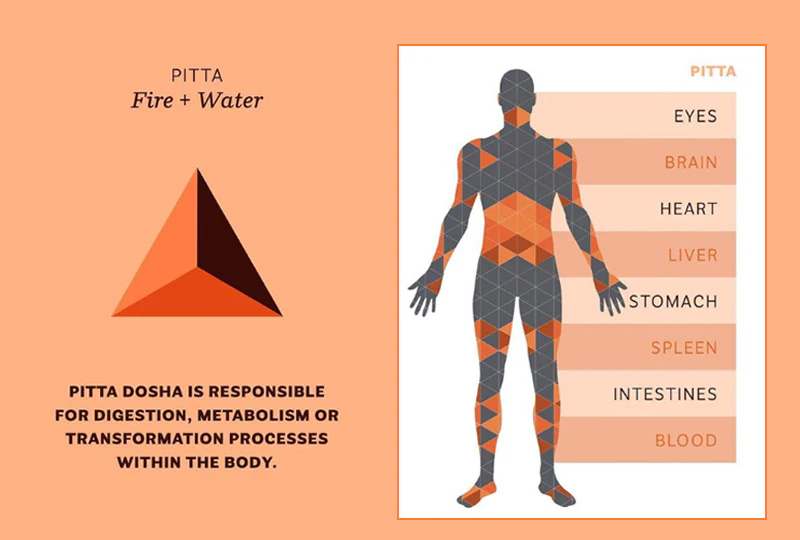
Understanding the seat of a dosha helps in its treatment.
Pitta is composed of Fire and Water elements. You’ll notice all its “seats” are areas where transformation happens:
- In the gut, food becomes energy.
- In the liver, toxins are processed.
- In the eyes, light becomes sight.
- In the skin, sunlight is synthesized and heat is released.
Pro-Tip: If you feel “over-heated” (think heartburn, skin rashes, or irritability), Ayurveda suggests cooling these specific areas—especially the gut and the liver—to bring Pitta back into balance.
The “Basement” Analogy: Think of the seats of the doshas like the utility rooms of a house. Vata is in the basement (colon), Pitta is on the ground floor (small intestine), and Kapha is in the attic (chest/head). If there’s a fire on the ground floor, you don’t run to the attic with a fire extinguisher—you go straight to the kitchen.
Characteristics of a Pitta Individual
A Pitta individual is defined by the Fire and Water elements. Just like a steady flame, they are intense, transformative, and sharp. When balanced, they are brilliant leaders and “doers”; when out of balance, they can be a bit… combustible.
The balanced Pitta individual is blessed with a joyful disposition, a sharp intellect, and tremendous courage and drive. As the fire of the mind and body becomes unruly, however, the laughing Pitta quickly becomes the yelling – Pitta. Anger, rage, and ego replace Pitta’s positive attributes, leaving an individual who is bitter with life, and overbearing towards others. There is a saying that imbalanced Pitta individuals don’t go to hell; they simply create it wherever they go!
Pitta imbalances commonly manifest in the body as infection, inflammation, rashes, ulcers, heartburn and fever.
Physiological Characteristics of Pitta Person (The Pitta Body)
1. Physical Build and Energy
- Frame: Medium build with good muscle tone. They gain muscle more easily than Vata types but aren’t as naturally heavy-set as Kapha types.
- Physical Strength: They have moderate physical strength but high intensity. They often push themselves to the point of overheating during exercise.
- Sleep: They generally sleep soundly for moderate durations (6–7 hours). However, if their mind is overactive with a project, they may struggle to “turn off” the internal light.
2. Skin, Hair and Nails
- Skin: The skin is typically warm, soft, and oily. It often has a reddish or pinkish undertone. They are prone to freckles, moles, and “hot” skin conditions like rashes, acne, or hives.
- Hair: Fine and silky; tends toward premature greying or thinning.
- Nails: Pink, soft, and flexible; typically, well-shaped and lustrous.
3. Face and Senses
- Eyes: Pitta eyes are often very bright and sensitive to light. They frequently have a “sharp” or penetrating gaze. Many Pitta individuals end up needing glasses for nearsightedness due to the “heat” taxing the visual organ.
- Face: Heart-shaped or angular with sharp features (pointed nose/chin) and a glowing, reddish complexion.
- Senses: Sharp and acute; they have a strong sense of taste and a highly discerning “critical” eye.
4. Digestion and Metabolism (The Powerhouse)
The most defining physiological trait of a Pitta person is a strong, sharp appetite.
- Strong Digestion: They can typically digest almost anything, but they require regular meals. Their blood sugar tends to drop quickly if they don’t eat.
- Elimination: They usually have frequent, soft, or loose bowel movements. Because of their internal heat, they rarely struggle with constipation but may deal with “burning” during elimination if they eat spicy food.
- Cravings: They naturally gravitate toward cold drinks and sweet, cooling foods to balance their internal furnace.
5. Thermoregulation and Energy
Pitta types are “walking heaters.” Their bodies are constantly working to dissipate metabolic warmth.
- Body Temperature: Their hands and feet are usually warm to the touch, even in winter.
- Perspiration: They sweat easily and profusely, often with a strong or “sour” odor/fleshy smell.
- Energy level – Drive: High, focused, and steady energy. They are “doers” who push themselves until a task is finished.
- Endurance: Moderate to strong, but they tend to overheat. They are most energetic in cooler weather or during the early morning/evening.
- Burnout: Because they don’t know when to stop, they can suddenly “burn out” if they don’t consciously rest.
- Elimination – Regular and frequent (often 2–3 times a day)
- Quality: Soft, oily, and loose.
- They rarely experience constipation but are very prone to diarrhea or “urgent” movements.
- Characteristics: Often accompanied by a feeling of heat; stool may have a strong odor or a yellowish/orange tint due to excess bile.
| Category | Characteristic Features |
|---|---|
| Physical Build | Medium frame, athletic, well-proportioned, and stable weight. |
| Skin | Warm, soft, and oily; prone to freckles, redness, and sunburn. |
| Hair | Fine, silky, and straight; prone to premature greying or thinning. |
| Nails | Pink, soft, flexible, and lustrous. |
| Face & Eyes | Sharp features (pointed nose/chin); piercing, light-sensitive eyes. |
| Appetite | Very strong and sharp; gets “hangry” if meals are missed. |
| Elimination | Frequent and soft; prone to loose stools or heartburn. |
| Energy Level | High, focused, and goal-oriented; tends to overheat during exercise. |
| Temperament | Intelligent, organized, and courageous; can be irritable or perfectionistic. |
| Sleep | Sound and moderate (6–7 hours); may stay awake late to work. |
| Climate Preference | Prefers cold, well-ventilated environments; dislikes humidity and heat. |
Psychological Characteristics of Pitta Person (The Pitta Mind)
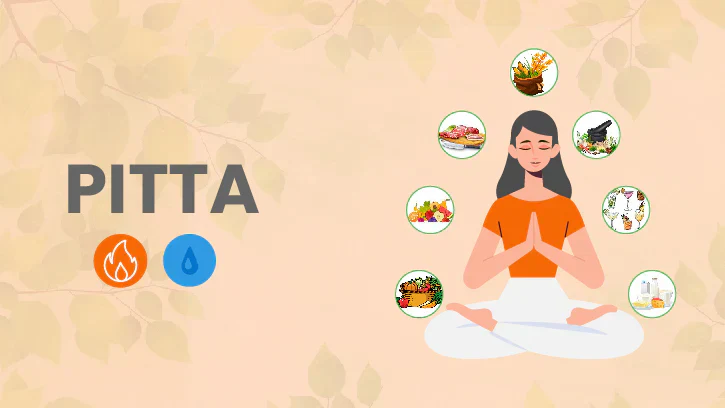
In balance, Pitta individuals are smart, enthusiastic, and fun to be around. They find joy in life and radiate this joy to others. Pitta types succeed in most jobs they put their minds to and naturally make good business-people, lawyers, professors, doctors, engineers, architects, scientists, politicians, and designers.
While not as prone to mental disorders as Vata individuals, the fiery temperament of Pitta types may often burn out of control. Like Vata, an overly active mind often defines Pitta psychological imbalances. These thoughts are usually rooted in anger, fear, hatred, and jealousy. Mental disorders include uncontrollable anger, anxiety, obsessive type behavior, and deep-seated emotional problems.
While fun to be around in balance, the imbalanced Pitta individual can be totally overbearing to others. Cooling the mind through a Pitta-pacifying diet and lifestyle will help re-establish joy and harmony in even the hottest Pitta types.
Pitta Dreams
Pitta dreams are just like their waking life: intense, vivid, and full of action. Because Pitta is associated with the element of Fire and the sense of sight, their dreams are often cinematic and highly colorful.
Common Themes in Pitta Dreams
- Problem-Solving: They often dream about work, projects, or organizing things. It’s not uncommon for a Pitta to “solve” a real-world problem while asleep.
- Conflict & Competition: Dreams of being in an argument, a battle, or a high-stakes competition.
- Adventure & Conquest: They may dream of climbing mountains, leading an army, or succeeding in a difficult mission.
- Violence or Aggression: When Pitta is high, dreams can become “hot” and aggressive, involving fights or confrontations.
The “Fire” Element in Dreams
- Dreaming of fire, lightning, or explosions.
- Dreaming of the bright sun or being in a desert.
- Seeing vivid colors, particularly reds, oranges, and yellows.
Why it Matters? If a Pitta person starts having frequent “fiery” dreams or nightmares where they feel angry, it is a physiological signal that their liver or small intestine is holding too much heat. This is often the body’s way of “venting” excess Pitta during the night.
The effects of the Six Tastes on Pitta Dosha
In Ayurveda, every food or substance has atleast one of the six tastes: sweet, sour, salty, pungent, bitter, and astringent. To properly satisfy the body and mind, a full meal should include all six tastes. Each food has at least one taste, and many have two or more – for example celery (bitter, pungent, salty). The six tastes all have different qualities, such as cooling or oily.
To pacify a dosha that is elevated in your constitution, emphasize tastes with the opposite qualities in your meal. Pitta is made from fire and water. So, sweet, bitter and astringent tastes pacify Pitta. And pungent, salty and sour tastes increase Pitta.
Therefore, Pitta people benefit from eating the following foods:
- Sweet (qualities – oily, cooling, and heavy) foods include – grains, ghee, pasta, bread, sugar, milk, cheese, potatoes, carrots, beets, squash, parsnips, cucumber, and most fruits.
- Bitter (qualities – light, cooling, and dry) foods include – turmeric, fenugreek, leafy green vegetables, eggplant, and fresh herbs. Sprinkling chopped green herbs on a dish provides the bitter taste.
- Astringent (qualities – dry, cooling, and heavy) foods include – pears, legumes, tofu, and beans. The main meal should include legumes or tofu to be complete.
How to Pacify Pitta?
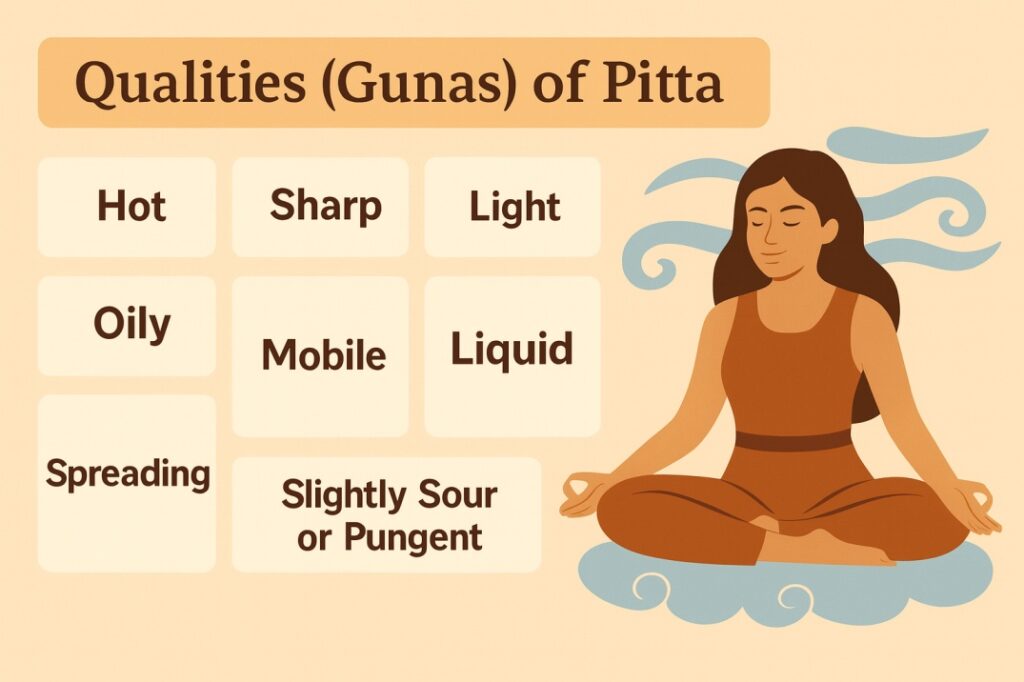
Pitta is hot, liquid, sharp, light, quickly penetrating, sour, and slightly oily. It is pacified by practices that are cooling, soothing, heavy, slightly drying, and mild as these characteristics are opposite to its own.
Those with a lot of Pitta tend toward intensity both in their emotions and activities. They benefit from a mild and moderate work and personal life. They should partake in soothing hobbies and avoid activities that might provoke strong emotions.
What to do?
- Oil massages with cooling oils
- Go swimming
- Go on walks in the woods or in the shade, avoiding the sun
- Take cool baths
- Listen to calming music
What Not to do?
- Sunbathe or stay in the sun too long
- Get stressed
- Use saunas and steam rooms
- Give into strong anger or irritation
- Engage in competitive activities
Massage
Pitta is pacified by cooling or soothing oils, such as coconut or almond oil, which counteract its heat and sharpness. They provide grounding and Pitta’s highly active intellect gets well deserved rest with this full body sensory experience.
Exercise
Swimming and outdoor exercises in the shade are the best forms of exercise for Pitta. Those with a lot of Pitta will benefit from noncompetitive sports, reigning in their competitiveness and focusing on enjoying the exercise.
What should Pitta people eat? What should they avoid?
To keep the Pitta “fire” from turning into a wildfire, the goal is to favor foods that are cool, heavy, and dry. Think of it as adding a cool breeze and some grounding earth to a hot flame.
What to Eat (The “Cooling” List)
- Focus on sweet, bitter, and astringent tastes.
- Vegetables: Favor hydrating and sweet veggies like cucumbers, zucchini, asparagus, kale, broccoli, and cauliflower.
- Fruits: Stick to sweet, ripe fruits like melons, grapes, pears, pomegranate, and coconut.
- Grains: Cooling grains like basmati rice, barley, and oats are excellent for grounding your energy.
- Dairy: Most dairy is cooling. Ghee (clarified butter), milk, and unsalted butter act as “fire extinguishers” for Pitta.
- Proteins: Chickpeas, mung beans, and tofu are great. If you eat meat, stick to “white” meats like chicken or turkey.
- Spices: Use cooling herbs like cilantro, mint, fennel, cardamom, and turmeric.
What to Avoid (The “Heating” List)
- Avoid foods that are pungent (spicy), sour, or salty, as these act like gasoline on a fire.
- The “Heaters”: Chili peppers, radishes, raw onions, and garlic.
- Sour Ferments: Vinegar, soy sauce, hard cheeses, and sour cream. (Yes, even kombucha can be too heating for a high-Pitta person!)
- Acidic Fruits: Lemons, grapefruits, and sour berries.
- Stimulants: Coffee, alcohol, and tobacco are highly aggravating to Pitta.
- Red Meat: Beef and lamb are very heating and can increase internal irritability.
- Salty Snacks: Excessive salt causes water retention and internal heat.
Pro-Tip: The “Middle Day” Rule
Since Pitta is highest when the sun is at its peak (10:00 AM – 2:00 PM), this is actually when your digestive fire is the strongest. Eat your largest meal at lunch. This allows your body to use that intense fire productively rather than letting it sit and cause “heat” issues like heartburn or vivid dreams at night.
Asanas and Pranayama for Pitta Body Type
For a Pitta body type, the goal of yoga and breathwork is cooling, surrendering, and releasing effort. Because Pittas are naturally competitive and driven, they often push too hard in their practice.
The secret for Pitta is to practice at 70% capacity—don’t strive for the “perfect” pose; strive for the most “relaxed” version of it.
Cooling Pranayama (Breathwork)
These techniques help lower the body’s internal temperature and calm a frustrated or “hot” mind.
- Sheetali (Cooling Breath): Curl your tongue into a tube and inhale deeply through the “straw.” Exhale through the nose. If you can’t curl your tongue, hiss the air in through your teeth (Sitkari).
- Chandra Bhedana (Moon-Piercing Breath): Close your right nostril and inhale only through the left (the cooling, lunar channel). Close the left and exhale through the right. Repeat for several cycles.
- Brahmari (Humming Bee Breath): Exhaling with a low-pitched hum vibrates the nervous system and soothes Pitta-related irritability.
Recommended Asanas (Postures)
Focus on poses that massage the small intestine and liver (the seats of Pitta) and those that allow heat to escape the body.
1. Forward Folds (The “Surrender” Poses)
Forward folds are naturally cooling and introspective.
- Paschimottanasana (Seated Forward Bend): Focus on a soft belly rather than touching your toes.
- Uttanasana (Standing Forward Fold): Let your head hang heavy to release heat from the brain.
2. Heart Openers & Side Stretches
These help release tension from the mid-torso where Pitta heat builds up.
- Bhujangasana (Cobra Pose): Do this gently. Don’t “push” the floor away; lift using your back muscles to avoid creating internal friction.
- Trikonasana (Triangle Pose): Opens the side body and helps “vent” the liver and gallbladder area.
3. Twists
Twists are “wringing out” the digestive organs.
- Ardha Matsyendrasana (Half Lord of the Fishes): A gentle seated twist helps clear excess heat from the digestive tract.
4. Restorative Poses
- Balasana (Child’s Pose): Grounding the forehead to the earth instantly cools the “judgmental” center of the Pitta mind.
- Viparita Karani (Legs Up the Wall): Excellent for draining heat from the lower extremities and calming the heart.
🛑 What to Avoid?
- Hot Yoga: Practicing in a 40°C (104°F) room is the fastest way to a Pitta meltdown.
- Excessive Sun Salutations: Doing 108 Sun Salutations creates too much internal heat (Agni).
- Long Inversions: Handstands and Headstands can move too much heat to the head/eyes. Keep these brief.
Pitta Mantra: “I release the need to be perfect. I embrace the cool and the calm.”