
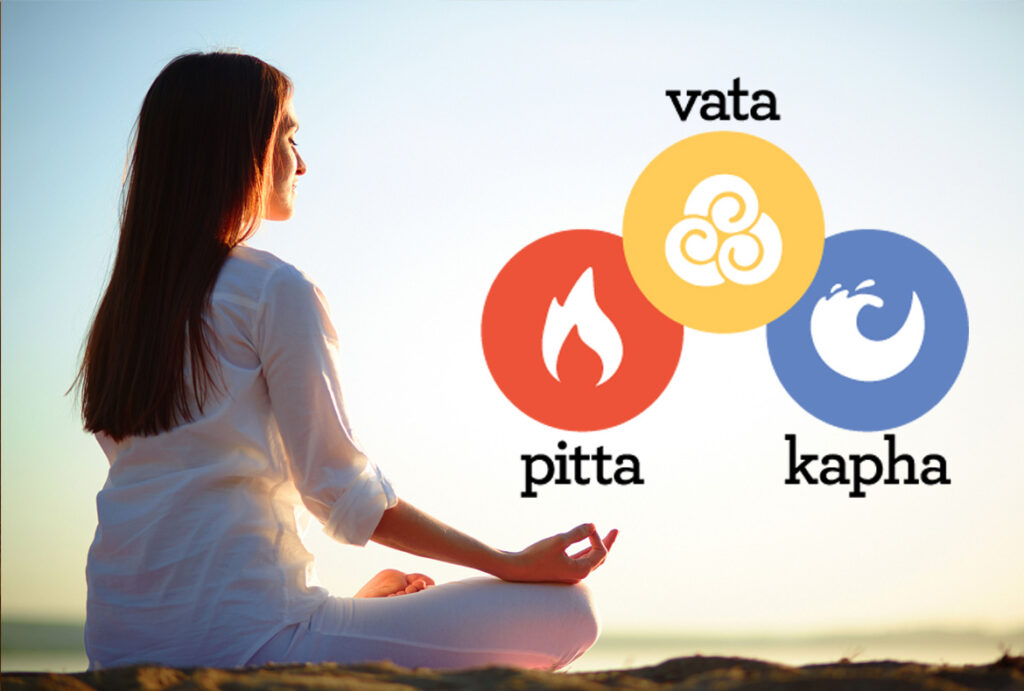
According to Ayurveda, each one of us are born with a certain body type or constitution known as Prakruti. When we deviate from our natural constitution (due to stress, unhealthy diet, poor lifestyle, medicines etc.), we attract diseases. The diseased state or an imbalance in our energies is known as Dosha or Vikruti.
In Ayurveda there are 3 types of Doshas or body types – Vata, Pitta and Kapha.
In this article we are going to discuss the Kapha Dosha!

Our body is made up of 5 elements air, water, earth, fire and ether.
The Kapha dosha – is principally a combination of Earth and Water elements. It is the energy that forms the body’s structure and provides the “glue” or cohesion that holds the cells together, lubricates joints, moisturizes the skin and maintains immunity. It governs the growth of the dhatus (bodily tissues) – the blood, fat, muscles, bones, marrow and other fluids in the body. It is also responsible for healing.
The qualities of Kapha dosha are – moist, cold, heavy, slow/dull, soft, sticky or cloudy, oily, liquid, slimy/smooth, dense and static.
In Ayurveda, there is a law which states that “like increases like and opposites decrease.” When similar qualities come together, their quantitative expression increases. For example, Winter season has attributes of liquid, heavy, cold, sticky and cloudy. Therefore, in the winter, when these characteristics predominate in the external environment, internal kapha tends to be increased.
Physiologically, kapha moistens food, gives bulk to our tissues, lubricates joints, stores energy, and relates to cool bodily fluids such as water, mucous, and lymph.
Psychologically, when in balance – Kapha is expressed as love, calmness, and forgiveness. When out of balance – it leads to attachment, greed, possessiveness, and congestion disorders.
The main seat of kapha in the body is stomach and chest. It is also located in throat, lungs, head, lymph, fatty tissue, connective tissue, ligaments, and tendons.
Why the “Seat” Matters?
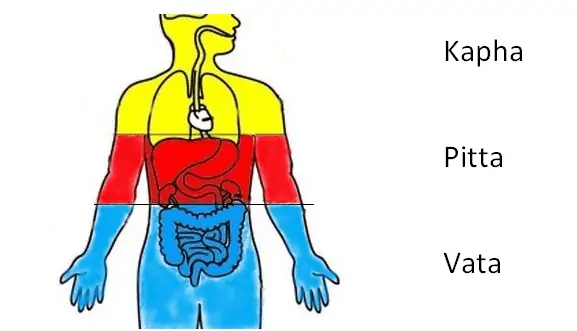
Understanding the seat of a dosha helps in its treatment.
- The Chest connection: Since Kapha sits in the chest, breathing exercises (Pranayama) and heart-opening yoga poses are the fastest ways to “stir” and clear excess Kapha.
- The Digestive connection: Even though it sits in the chest, Kapha accumulates in the stomach first. This is why a “sluggish stomach” is often the first sign of a Kapha imbalance before it moves up into the lungs as congestion.
Common Kapha Disorders of the Body
Obesity, Diabetes, Colds and Flu, Yeast conditions, Sinus congestion, Anorexia and bulimia, lymphatic system disorders, excessive sleeping, water retention/bloating, allergies, excess phlegm and mucous conditions, intolerance of cold and damp, asthma, low thyroid function, heart disease.
Characteristics of the Kapha Individual
The phrase Kapha comes from two Sanskrit roots, ‘ka’ meaning water and ‘pha’ meaning to flourish – that which is flourished by water. Kapha’s nature is also Earth, so Earth and Water give kapha individual its definitive qualities. Qualities received by kapha from earth include heaviness and stability, and from water include oiliness and smoothness. Therefore, Kapha molecules tend to stick together to form dense masses (earth element) and give the body a chubby shape.
Physiological Characteristics of Kapha person (The Kapha Body)
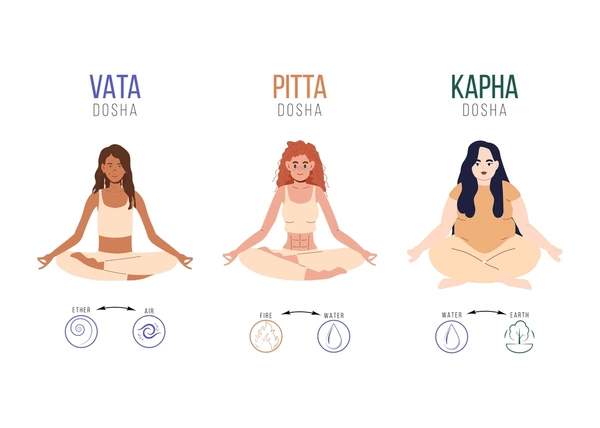
Because Kapha is naturally heavy, slow, and cool, its physiological traits reflect a “solid” and “enduring” nature.
1. Physical Build & Structure
- Frame: Generally broad-shouldered with a sturdy, “large-boned” skeletal structure. Kapha types are naturally strong and have the highest physical endurance of all three doshas.
- Weight: A natural tendency to gain weight easily and a significant challenge in losing it. This is due to a slower basal metabolic rate.
- Joints: Well-lubricated, large, and hidden (not prominent or “knobby” like Vata). They rarely suffer from “popping” joints but may experience fluid retention or stiffness.
2. Skin, Hair, and Nails
- Skin: Typically thick, pale, and cool to the touch. It is naturally oily and well-hydrated, which often leads to fewer wrinkles and a more youthful appearance as they age.
- Hair: Thick, voluminous, and often wavy or curly. It tends to be lustrous and strong, though it can become oily if Kapha is imbalanced.
- Eyes: Large, attractive, and “liquid” or soft in appearance. They usually have thick, long eyelashes and clear, white sclera (the whites of the eyes).
3. Digestion and Metabolism
- Appetite: Regular but slow. Kapha types can often skip a meal without feeling irritable (unlike Pittas), as their bodies are excellent at storing energy.
- Metabolism (Agni): Known as Mandagni (slow/dull fire). Digestion takes a long time, and they may feel heavy or sleepy immediately after eating.
- Elimination: Bowel movements are usually regular, soft, and oily.
4. Sleep and Energy Levels
- Sleep: Deep, heavy, and long. Kaphas are the “heavy sleepers” of the world and often find it very difficult to wake up in the morning.
- Stamina: While they are slow to start (inertia), they have incredible long-term stamina. They can work or exercise for long periods once they get moving.
- Pulse: The Kapha pulse is described as “Swan-like” (Gaja Gamini). it is slow, steady, and regular.
| Feature | Characteristic |
|---|---|
| Complexion | Pale, fair, uniform |
| Body Temp | Cool and slightly damp (clammy hands) |
| Voice | Deep, pleasant, and resonant |
| Immunity | Naturally strong; best resistance to disease |
| Tendencies | Excess mucus, congestion, and water retention |
Psychological Characteristics of Kapha person (The Kapha Mind)
Kapha dreams
One of the important functions of “majja” dhatu (nerves and bone-marrow tissue) is to create dreams. Dreams are the discharge of the nerve cells, the drainage of incomplete thoughts, actions, and feelings. Many times, thoughts come during our daily activities, but we are not completely aware of them. Any thought without total awareness is an incomplete thought. The brain cells pick up that incomplete thought, and because incomplete thoughts stay in the brain cells, our brain has to complete these thoughts to restore order. One of the functions of majja dhatu (nerves and bone marrow) is to drain or complete our incomplete actions. In that way dreams are necessary. In a dream you finish unfinished business and the brain is able to restore order.
According to Ayurveda, dreams are classified as Vata, Pitta, or Kapha. Vata dreams are active, pitta dreams are fiery, and kapha dreams are romantic. Kapha people often dream about – Swimming, finding money, eating candy, sex, doing the same thing again and again slowly, arriving too late, seeing self as dead, snow, spring, winter, satisfy unconscious needs.
Make a record of your dreams and try to analyze them. Do it for one month. Within that time, you will discover the pattern of your dreams and how your “majja” dhatu (nerves and bone marrow) is functioning in your life and relationships.
The effects of tastes on Kapha Dosha
In Ayurveda, every food or substance has atleast one of the six tastes: sweet, sour, salty, pungent, bitter, and astringent. To properly satisfy the body and mind, a full meal should include all six tastes. Each food has at least one taste, and many have two or more – for example celery (bitter, pungent, salty). The six tastes all have different qualities, such as cooling or oily.
To pacify a dosha that is elevated in your constitution, emphasize tastes with the opposite qualities in your meal. Kapha is made from earth and water. Therefore, Pungent, bitter, astringent tastes pacify kapha. And sweet, sour, salty tastes increase kapha.
So kapha people benefit from eating the following foods:
- Astringent (qualities – dry, cooling, and heavy) foods include – pears, legumes, tofu, and beans. The main meal should include legumes or tofu to be complete.
- Bitter (qualities – light, cooling and dry) foods include – Turmeric, fenugreek, leafy green vegetables, eggplant, and fresh herbs. Sprinkling chopped green herbs on a dish provides the bitter taste.
- Pungent (qualities – heating, dry and light) foods include – black pepper, ginger, Tulsi, cardamom, radish, Chile.
How to Pacify Kapha?
Those looking to pacify kapha should find ways that they can challenge themselves, be active, and change their routines every now and then. Stimulation is the key to counterbalance inertia and stability, which can eventually become rigidity.
What to do?
- Dry -powder or oil massages
- Take warm baths
- Listen to lively music
- Learn new things
- Deviate from your routine
- Seek out stimulating company
What Not to do?
- Don’t be too sedentary
- Don’t sleep to much
- Don’t Gain too much weight
- Don’t expose yourself to cold much
- Don’t Live a secluded lifestyle
Massage
Heating or stimulating massages, such as those using dry powder, silk gloves, or heating oils, pacify kapha. Use sesame or mustard oil for massage for they give lightness and heat. They are especially effective if followed by a steam bath or dry heat.
Exercise
- Exercise is important for those with strong kapha as it stimulates their slower metabolism
- Most benefit comes from the speed, activity, and competition provided by group sports.
- Dancing is also good as its lightness and movement balance kapha’s heaviness and stability.
What should Kapha people eat? What should they avoid?
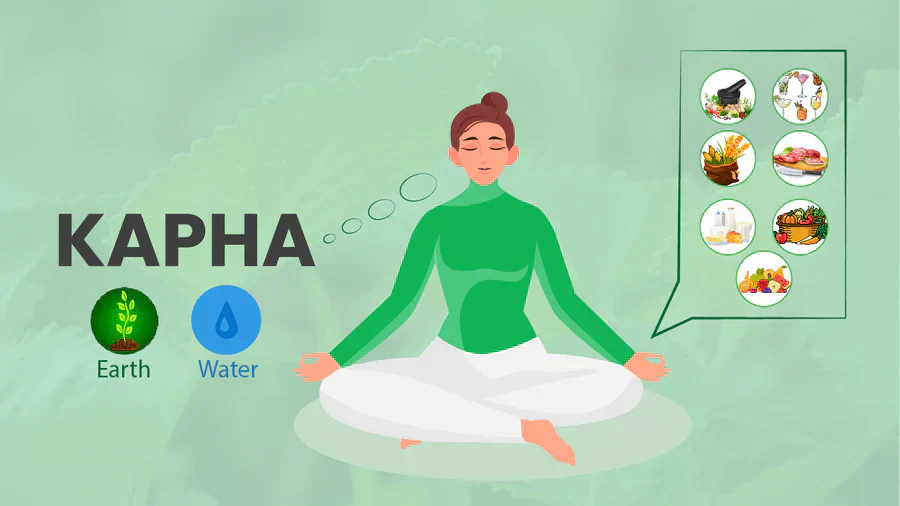
Food recommendations for the Kapha types:
- Spicy food is good for your digestive system, since it stimulates the digestive fire and quickens the digestive process. Moreover, it also stimulates the mind to initiate action and helps expel out excess phlegm and waste from the body. Spices are particularly helpful when one catches a cold or has a severe sinus issue. Some that are highly recommended: black pepper, red and green chilies, and the famous Indian ‘Garam Masala.’
- Millet flour is suitable for your body type, since it is easy to digest, and has numerous health benefits. Whole wheat flour and other heavy flours do not appeal to you, and may make you feel even more heavy, and would not digest soon enough.
- Green leafy vegetables tossed in olive oil or with any other dressing, with medium spices will help you stay active and alert. This can be coupled with vegetable or chicken soup that will boost the digestion process.
- Take herbal teas instead of milk teas that will help you keep warm.
Types of food
| Types of food | KAPHA | |
|---|---|---|
| Avoid | Favor | |
| Fruits | Sweet & sour fruit, Bananas, Dates, Grapefruit, Melons, Oranges, Pineapple, Plums | Apples, Cherries, Figs (dry), Grapes, Lemons, Limes, Peaches, Pears, Prunes, Raisins |
| Vegetables | Most sweet and juicy vegetables, Cucumber, Olives (black or green), Potato (sweet), Pumpkin, Squashes (summer), Tomatoes (raw), Zucchini | Most pungent & bitter vegetables, Asparagus, Beets & greens, Broccoli, Cabbage, Cauliflower, Celery, Corn, Eggplant, Green beans, Peppers, Mushrooms |
| Grains | Bread (yeast), Oats (cooked), Pasta, Rice (brown, white), Wheat, Rice cakes | Amaranth, Barley, Rye, Buckwheat, Quinoa, Granola, Millet, Rice (basmati), Oats (dry) |
| Legumes | Kidney beans, Miso, Soybeans, Soy Cheese, Tofu (cold) | Black beans, Chickpeas, Lentils (all), Mung beans, Navy beans, Peas (dried), Pinto beans, Tempeh, Tofu (hot) |
| Dairy | Butter (salted), Cheese (most), Cow’s milk, Ice cream, Sour cream, Yogurt (plain, with fruit or frozen) | Soy milk, Buttermilk, Cottage cheese, Ghee, Goat’s cheese (unsalted and not aged), Goat’s milk (skim only), Yogurt (diluted) |
| Animal Foods | Beef, Chicken (dark), Fish (sea), Lamb, Mutton, Pork, Turkey (dark) | Chicken (white), Eggs (not fried), Fish (freshwater), Rabbit, Shrimp, Turkey (white) |
| Condiments | Chocolate, Lime, Mayonnaise, Pickles, Salt, Vinegar | Black pepper, Chili peppers, Horseradish, Mustard, Scallions, Seaweed |
| Nuts | Almonds, Coconut, All other nuts | Charole |
| Seeds | Psyllium, Sesame | Flax, Pumpkin, Sunflower |
| Oils | No oils, except for those in “Yes” column | For internal and external use in small amounts: Corn, Canola, Sunflower, External – Sesame |
| Beverages | Alcohol (beer, hard and sweet wine), Caffeinated beverages, Icy cold drinks, Iced tea, Chocolate milk, Almond milk, Rice milk, Orange juice, Tomato juice | Alcohol – dry wine, Apple juice/cider, Carob, Cranberry juice, Grain ’coffee’, Grape juice, Pineapple juice, Pomegranate, Prune juice, Soy milk (hot and well spiced) |
| Spices | Salt | All spices are good |
| Sweeteners | Barley malt, Molasses, Maple syrup, White sugar, Natural sugar | Fruit juice concentrates, Honey (raw and unprocessed) |
Asanas and Pranayama for Kapha Body Type
To balance Kapha, your yoga practice should focus on warmth, movement, and lightness. Because Kapha is associated with the earth and water elements—often manifesting as heaviness, lethargy, or congestion—the goal of these asanas is to increase “Agni” (digestive fire) and stimulate circulation.
1. Warming & Dynamic Flows
The most important part of a Kapha-pacifying practice is the pace. Unlike Vata or Pitta practices, which should be grounding or cooling, Kapha benefits from a faster, more vigorous flow.
- Surya Namaskar (Sun Salutations): Do 6–12 rounds at a brisk pace to build heat and get the lymph moving.
- Vinyasa Transitions: Keep moving between poses rather than resting for long periods.
2. Key Kapha-Pacifying Asanas
| Asana Category | Recommended Poses | Why it works |
|---|---|---|
| Standing Poses | Warrior I & II, Triangle (Trikonasana) | Builds stamina, creates heat, and counters “heaviness” in the legs. |
| Heart Openers | Camel (Ustrasana), Bow (Dhanurasana), Cobra | Opens the lungs and chest to clear congestion and emotional stagnation. |
| Core / Heat | Boat Pose (Navasana), Plank | Ignites the “digestive fire” and burns away sluggishness. |
| Inversions | Headstand (Sirsasana), Handstand | Reverses blood flow to drain fluid from the legs and shifts your perspective. |
| Twists | Revolved Chair, Seated Spinal Twist | Massages the internal organs to aid slow digestion (mandagni). |
3. Practical Tips for your Practice
- Focus on the Breath: Use Ujjayi breath (the “ocean breath”) throughout your practice to stay focused and warm.
- Gaze Upward: In poses like Tree (Vrikshasana), look toward the ceiling. Looking up invites’ lightness and counters the downward-moving energy of Kapha.
- Hold for Strength: While you want a flow, hold the “power” poses (like Warrior or Plank) long enough to feel the muscles work; this builds the mental “fire” needed to overcome inertia.
- Short Savasana: Keep your final relaxation (Corpse Pose) brief (around 5 minutes). Too much lying still can increase Kapha’s lethargy.
4. Energizing Pranayama (Breathing)
Before or after your asanas, try Kapala Bhati (Skull Shining Breath). This involves forceful exhalations and passive inhalations. It is highly effective at clearing the sinuses and “waking up” the brain.
In addition, energizing, heat-building, and stimulating poses like:
- Agnisar dhauti
- Back bending poses
- Spinal Twist
- Inversions
- Tree Pose
- Bow Pose
are all very effective.
References:
- Textbook of Ayurveda – Fundamental Principles – Dr.Vasant Lad
- Practical Ayurveda by Sivananda Yoga Vedanta Center
- Eat Taste Heal – An Ayurvedic Guidebook and Cookbook for Modern Living – By Thomas Yarema, Daniel Rhoda, Chef Johnny Branningan
- Banyan Botanicals – Learn Ayurveda, Blogs and Recipies