
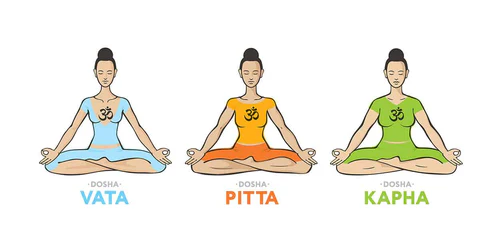
According to Ayurveda, each one of us are born with a certain body constitution known as Prakruti. When we deviate from our natural constitution (due to stress, unhealthy diet, poor lifestyle, medicines etc.), we attract diseases. The diseased state or an imbalance in our energies is known as Dosha or Vikruti.
In Ayurveda there are 3 types of Doshas or Body types – Vata, Pitta and Kapha.
In this article we are going to discuss the Vata Dosha!
Our body is made up of 5 elements air, water, earth, fire and ether.
Vata dosha – is principally a combination of space and air elements.

The Sanskrit term Vata is related to the verb “vah,” meaning vehicle, to carry or to move which translates as “wind’ or “that which moves things.” So, Vata is the energy of the movement and the force governing all biological activity. It is the principle of mobility that regulates all activity in the body, from how many thoughts one might have during a given period to how efficiently food moves through the intestines. The Vata quality is responsible for joy, happiness, creativity, speech, sneezing, and elimination, to name just a few functions. Vata is often called the “King of the Doshas” since it governs the body’s greater life force – “Prana” and “gives motion to Pitta and Kapha.” Thus, when Vata (Prana) leaves the body, life ceases.
The qualities of Vata dosha are – dry, rough, light, mobile, clear, subtle, and cold. A Vata individual will display physical and mental characteristics that reflect these qualities in both balanced and imbalanced state.
Physiologically, Vata governs anything related to movement, such as breathing, talking, nerve impulses, movements in the muscles and tissues, circulation, assimilation of food, elimination, urination, and menstruation.
Psychologically, Vata governs communication, creativity, flexibility, and quickness of thought.
The main seat of Vata in the body is colon. It is also located in thighs, bones, joints, ears, skin, brain, and nerve tissues.
Why Knowing the “Seat” Matters?
Understanding the seat of a dosha helps in its treatment.
- Digestion First: Keeping the colon hydrated and moving (avoiding constipation) is the #1 way to keep Vata balanced.
- Warmth & Oil: Since Vata’s seats are prone to cold and dryness, applying warm oils (Abhyanga) to the skin and hips is highly effective.
- Grounding: Focusing on the lower half of the body through grounding exercises helps “descend” the flighty energy of Vata back to its seat.

Characteristics of the Vata Individual
In Ayurveda, a Vata individual is defined by the elements of Air and Space. Their physiology is characterized by lightness, dryness, coldness, and irregularity. Because Vata governs all movement in the body, a Vata person’s system is often active but easily exhausted. The Vata Paradox: While they are the most energetic and creative of the types, their physiology is the most fragile. They are like a high-performance sports car with a very small fuel tank.
Physiological Characteristics of Vata person (The Vata Body)
1. General Build and Frame
Structure: Vata types are usually at the extremes—either very tall or very short. They have a naturally thin, slender, or “willowy” frame.
Weight: They generally have a low body weight and find it very difficult to gain weight and even harder to keep it on. Their metabolism is fast but erratic.
Bone Structure: Because they lack subcutaneous fat, their joints, veins, and tendons are often very prominent or “knobby.” Bones and joints are often prominent or “bony” due to a lack of padding. It is common for their joints to make cracking or popping sounds.
2. Skin, Hair, and Nails
Skin: Naturally dry, thin, and cool to the touch. They are the most prone to chapping, cracking, and premature wrinkles. Veins are often visible beneath the surface.
Hair: Hair is often thin, frizzy, or curly and prone to being brittle. It tends to be dry and can be prone to split ends.
Nails: Often brittle, thin, and prone to breaking or peeling.
3. Face and Senses
Face: Face is often thin and long with small, deep-set, or active eyes.
Eyes: Usually small, deep-set, and active (sometimes described as “shifty” or “darting”). They may lack the luster or moisture seen in other types.
Teeth: Can be irregular, protruding, or large.
4. Digestion and Metabolism (The “Variable” Nature)
Appetite: Highly erratic. They may be ravenous one day and forget to eat the next.
Digestion: Prone to “windy” digestive issues such as gas, bloating, and constipation. Their “Agni” (digestive fire) is like a candle in the wind—unstable and easily blown out.
Excretion: Bowel movements are often dry, hard, and irregular.
5. Energy and Movement
Activity Level: They move quickly and talk fast. However, they have low endurance. They are “sprinters, not marathoners.” They tend to use up their energy in quick bursts and often experience a “crash” after periods of high activity.
Sleep: Light and easily disturbed. Vata types are the most likely to suffer from insomnia or wake up feeling unrefreshed between 2:00 AM and 6:00 AM (the Vata time of night).
Elimination: The “Seat of Vata” (the colon) tends toward dryness, making constipation a common physiological trait.
| Feature | Characteristic |
|---|---|
| Body Weight | Low; difficult to gain weight |
| Skin Texture | Dry, rough, cool |
| Joints | Prominent; prone to cracking |
| Hands/Feet | Usually cold (poor circulation) |
| Speech | Fast, talkative, sometimes scattered |
| Weather Preference | Loves the sun; hates cold and wind |
Psychological Characteristics of Vata person (The Vata Mind)
In balance – Vata individuals are dynamic, just like the wind at their foundation. These individuals experience life “below the surface” and have the natural ability to inspire others.
While Vata types may be inclined to switch careers throughout their lifetimes, they naturally make good teachers, artists, musicians, consultants, counselors, healing art practitioners, philosophers, foreign ministers, religious ministers, and are also suited to numerous other professions requiring creativity and communication skills.
When out of Balance – Just as they are prone to physical disease of the body, the delicate nature of Vata types also make them subject to the greatest number of mental disorders. Overly active thinking is a defining characteristic of many of these disorders. Some of the more commonly known include: depression, anxiety, insomnia, bipolar disorder, ADHD, obsessive compulsive disorder (OCD), and schizophrenia.
Calming the mind through a Vata pacifying diet and lifestyle can have remarkable results, even for serious mental disorders that are considered chronic in nature.
Qualities of Balanced Vata Individuals
Creative, Strong communicators, Artistic, Adaptable, Alert, emotionally sensitive, Enthusiastic, Imaginative, Perceptive, spiritually inclined, Spontaneous, Heightened Intuitive abilities, Compassionate, Sensitive to subtle energies, Charismatic, Multifaceted in interests and abilities
Qualities of Imbalanced Vata Individuals
Overly active thinkers, restless – cannot sit still, inclined towards fear, anxiety, depression, earn easily and spend impulsively, spacey and ungrounded, addictive personality, emotionally delicate and thin skinned, quick to judge or make decisions, shy and introverted, disorganized and poor planners, lack confidence and boldness, tend to procrastinate, moody and emotionally volatile, talk fast and breathlessly, grasp things quickly, but soon forget, interrupt or zone out in conversation, impatient
Vata dreams

In Ayurveda, dreams are considered a reflection of the “movement” within our subconscious. Because Vata is composed of Air and Space, Vata dreams are typically characterized by high velocity, altitude, and intensity. The dreams are often cinematic and colorful, but they jump from one scene to another without a logical transition.
When Vata is dominant or imbalanced, the mind remains active even during deep sleep, leading to vivid but often fragmented dreamscapes. Vata types tend to dream a lot. They may have multiple distinct dreams in a single night. But their “quick to learn, quick to forget” nature makes them miss the details the moment they wake up.
Vata dreams often mirror the physical qualities of the dosha: Light, Cold, Mobile, and Erratic.
Vata people often dream about – Flying and Falling, Movement and Travel: Dreams involving running, jumping, riding a bicycle, or traveling to new places. There is a sense of “going somewhere,” though the destination is often unclear. Being Chased: Reflecting the Vata emotion of fear or anxiety, these dreams often involve being pursued by a person, animal, or an unknown shadow. Feeling “Spacey” or Lost: Wandering through a labyrinth, being lost in a forest, or feeling disconnected from the ground. Cold and Wind: You may dream of storms, blizzards, or feeling shivering cold within the dream.
The effects of the Six Tastes on Vata Dosha
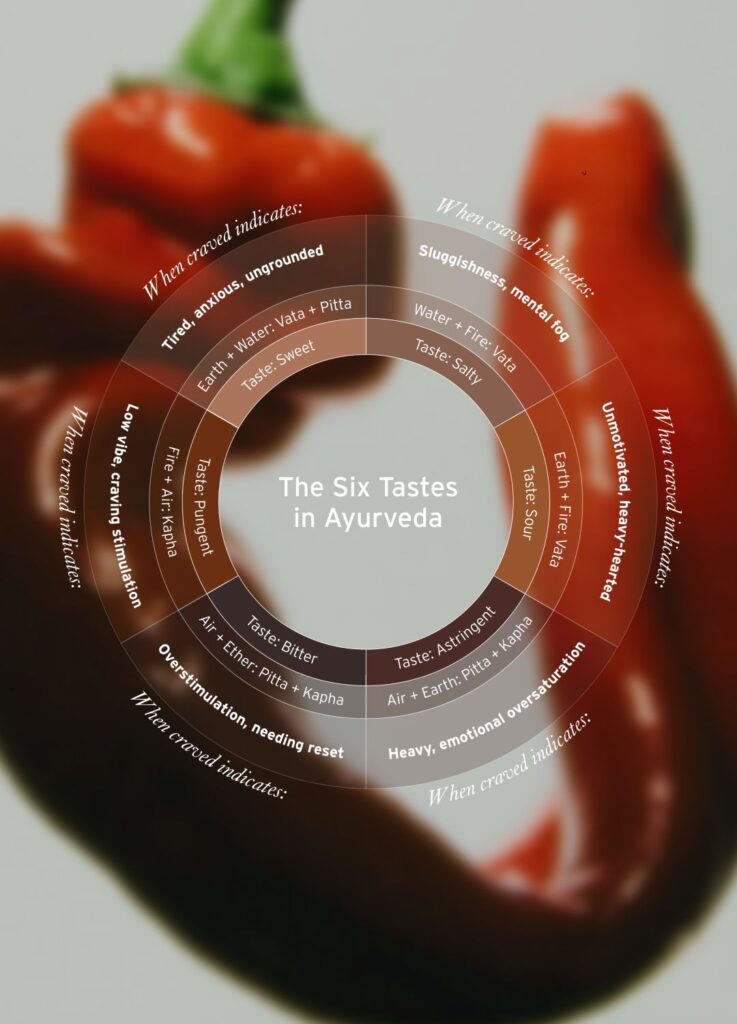
In Ayurveda, every food or substance has atleast one of the six tastes: sweet, sour, salty, pungent, bitter, and astringent. To properly satisfy the body and mind, a full meal should include all six tastes. Each food has at least one taste, and many have two or more – for example celery (bitter, pungent, salty). The six tastes all have different qualities, such as cooling or oily.
To pacify a dosha that is elevated in your constitution, emphasize tastes with the opposite qualities in your meal.
Vata is made from ether and air. So, sweet, sour and salty tastes pacify Vata. And pungent, bitter and astringent tastes increase Vata.
Therefore, Vata people benefit from eating the following foods:
Sweet (qualities – oily, cooling, and heavy) foods include – grains, ghee, pasta, bread, sugar, milk, cheese, potatoes, carrots, beets, squash, parsnips, cucumber, and most fruits.
Sour (qualities – light, heating and oily) foods include – lemon, curd, buttermilk, tomatoes, tamarind, and sour apples. Serve a slice of lemon and/or some yogurt with salt with your main meal.
Salty (qualities – heating and oily) foods include – black pepper, ginger, Tulsi, cardamom, radish, Chile.
How to Pacify Vata?
Vata is irregular, moving, light, dry, cool, fine, quick, and rough. It is pacified by practices that are regular, stable, heavy, oily, heating, viscous, slow, and smooth, as these characteristics are opposite to its own.
Regularity is the key for pacifying Vata. Those with a lot of Vata tend to become irregular in their movement and bodily rhythms, so try to keep to a fixed routine of eating, working and sleeping.
What to do?
- Maintain a fixed daily routine
- Relax regularly
- Go on countryside walks in the sunshine
- Spend time in quiet contemplation
- Listen to calming music
- Take warm baths
What Not to do?
- Get too stressed
- Eat at irregular times
- Consume caffeine
- Talk too much
- Sleep too little
- Exercise too regularly
- Become exposed to drafts and cold
- Activities that cause sensory overload
Massage
Oil massage with heating oils is one of the best and most effective lifestyle practices to pacify elevated Vata. An oil massage with special vata oils or plain sesame oil is heating, reduces dryness, and provide nourishment and grounding. A full body massage followed by a steam treatment is best
Exercise
- Grounding or strength building exercise and any sport with slow, directed movements pacify Vata
- Weightlifting is particularly good, as it provides stability and substance to counteract Vata’s lightness and mobility.
- Those with lot of Vata in their constitution should be careful to avoid overexertion.
What should Vata people eat? What should they avoid?
To balance the cold, dry, and light nature of Vata, the diet should be warm, grounding, oily, and nourishing. In Ayurveda, we use the “Law of Opposites”: since Vata is like a cold breeze, you want to eat like a cozy fireplace.
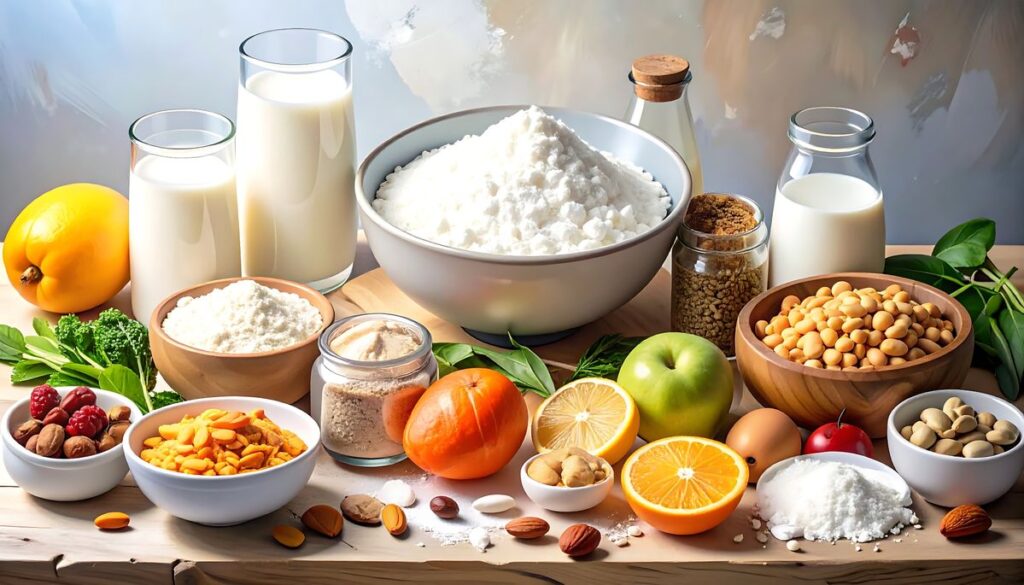
1. What Vata People Should Eat (The “Yes” List)
Vata thrives on foods that are Sweet, Sour, and Salty, as these tastes are grounding and moisture-retaining.
Warm, Cooked Foods: Think soups, stews, casseroles, and hot cereals. Cooking makes food easier to digest (Vata’s “weak spot”).
Healthy Fats & Oils: Vata needs lubrication. Use generous amounts of Ghee, sesame oil, olive oil, or coconut oil.
Grains: Focus on grounding, heavy grains like Basmati rice, oats (cooked in water/milk), and quinoa.
Sweet, Juicy Fruits: Choose heavy fruits like bananas, avocados, mangoes, papayas, and soaked raisins or dates.
Root Vegetables: Vegetables that grow underground carry “earth” energy. Carrots, beets, sweet potatoes, and radishes are excellent.
Spices: Use “warming” spices to kindle digestive fire (Agni). Ginger, cinnamon, cumin, cardamom, and small amounts of black pepper are perfect.
2. What Vata People Should Avoid (The “No” List)
Vata is aggravated by tastes that are Bitter, Pungent, and Astringent, as these are drying and cooling.
Raw & Cold Foods: Raw salads, iced drinks, and cold smoothies can “freeze” Vata digestion and cause bloating.
Dry & Crunchy Snacks: Avoid crackers, popcorn, rice cakes, and dry cereals. These increase the “dry” quality of the colon.
Astringent/Gas-Producing Veggies: Limit broccoli, cabbage, cauliflower, and leafy greens—unless they are well-cooked with plenty of oil and spices.
Caffeine & Stimulants: Coffee and black tea are very Vata-aggravating. They overstimulate the nervous system and lead to a “crash.”
Most Beans: Beans are “wind-producing.” If you eat them, stick to Mung Dal (split yellow mung beans) or red lentils, and cook them with ginger and asafetida (Hing).
3. The Vata Eating Routine
For a Vata person, how you eat is often as important as what you eat.
Eat at the same time every day: Routine is the “anchor” for Vata.
Sit down to eat: No eating on the go or while working at a computer.
Mindful Environment: Eat in a quiet, warm place without loud distractions.
Asanas and Pranayama for Vata Body Type
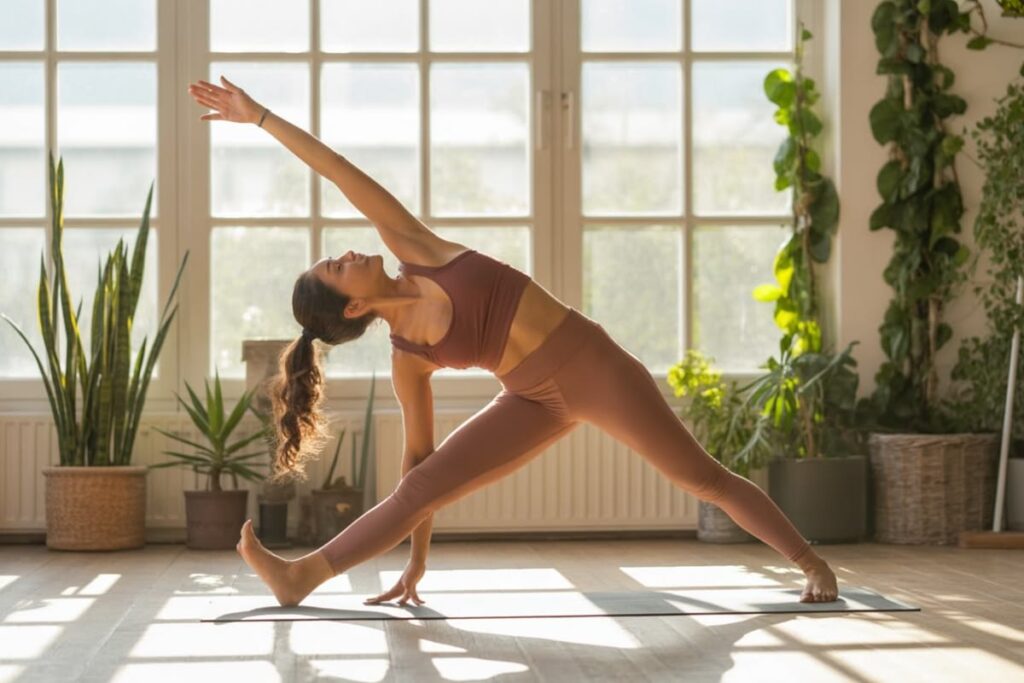
To balance Vata, your yoga practice should focus on grounding, stability, and warmth. Since Vata is naturally mobile and “spacey,” the goal of the practice is to slow down, build heat (without over-exhausting), and focus on the lower body (the seat of Vata).
Yoga Asanas (Postures)
Vata-balancing asanas should be performed with a slow, steady pace and a focus on deep, rhythmic breathing. Hold poses for longer to cultivate stillness.
- Grounding & Foundation
- Tadasana (Mountain Pose): Establishes a connection to the Earth. Focus on the four corners of your feet.
- Vrksasana (Tree Pose): Builds focus and stability. It helps “anchor” a scattered Vata mind.
- Virabhadrasana I & II (Warrior I & II): These build strength in the legs and hips, grounding the Vata energy into the lower body.
- Pelvic & Colon Health (The Seat of Vata)
- Apanasana (Knees-to-Chest Pose): The “wind-relieving pose.” It is the #1 pose for Vata as it aids digestion and moves “wind” out of the colon.
- Malasana (Garland Pose/Squat): Opens the hips and directs energy downward (Apana Vayu).
- Pashimottanasana (Seated Forward Fold): Calms the nervous system. Tip: Keep a slight bend in the knees if your hamstrings feel dry or tight.
- Restoration
- Viparita Karani (Legs Up the Wall): Excellent for calming the nervous system and improving circulation in cold Vata limbs.
- Savasana (Corpse Pose): Essential for Vata. Use a heavy blanket for extra weight and warmth to help the body fully “land.”