Can Hypothyroidism predispose you to SIBO?
How Hypothyroidism Contributes to SIBO? (SIBO in Hypothyroidism)
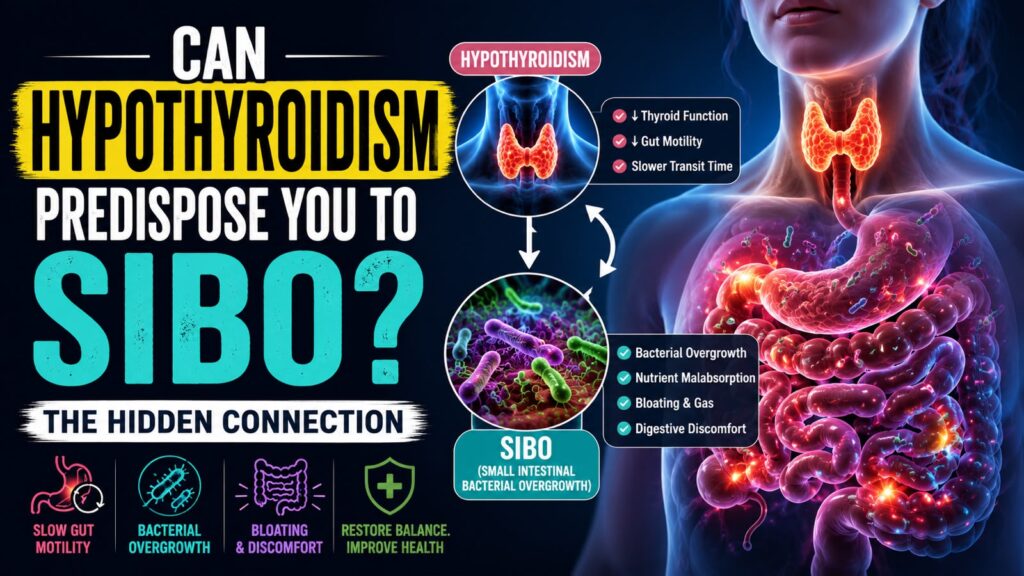
It has been reported that SIBO may be present in more than half of the patients with hypothyroidism (5). Recent studies suggest that small intestinal bacterial overgrowth (SIBO), a disorder of excessive bacteria in the small bowel, may also be associated with hypothyroidism (6-8). Some studies have suggested that hypothyroidism results in decreased gut motility, which increases the risk for the development of SIBO (1,3).
The objective of this article is to understand the association between hypothyroidism, altered GI motility and development of SIBO.
Small intestinal bacterial overgrowth (SIBO) is defined as an abnormally high bacterial population level in the small intestine. SIBO occurs when mechanisms controlling enteric bacterial growth are disturbed. In SIBO, bacteria such as Gram-negative coliforms overgrow in the small intestine, leading to gastrointestinal symptoms such as abdominal pain, bloating, and gas (12,13). One of the most common mechanisms that lead to SIBO is the small intestinal dysmotility. Thus, small intestinal dysmotility constitutes one of the risk factors for development of SIBO (9,10,11). Other risk factors include failure of the gastric acid barrier, anatomic alterations or impaired immunity (10).
On the other hand, Hypothyroidism is one of the most common endocrine conditions globally (14-16). Hypothyroidism can affect multiple organ systems, resulting in symptoms associated with decreased quality of life, including fatigue, weakness, memory issues, hair loss, hypersensitivity to cold, dry skin, and depression (17,18).
Hypothyroidism is known to affect the entire gastrointestinal system and cause hypomotility (19-21). A reduction in the motor activity of stomach, small intestine, and colon has been reported in previous studies. It has been found that hypothyroid patients show significant reduction in gastric emptying and thus have a delayed intestinal transit time (19-22). Changes in the motor activity of the digestive system may result in gastric or abdominal distension and constipation in hypothyroidism (20,23). Clinically, constipation and abdominal distension are known to be the typical gastrointestinal (GI) symptoms of SIBO as well. Thus, intestinal motor dysfunction associated with hypothyroidism could predispose you to bacterial overgrowth.
Study references:
- A study done by Olga et al. reported that Hypothyroidism prominently reduces esophageal and gastric motor activity and can cause gastrointestinal dysfunction. The study group included 30 females with primary hypothyroidism and 10 healthy females. They used – Gastroesophageal scintigraphy method, which is a noninvasive, simple, physiological method to use for evaluating esophagogastric motility and can be helpful in selecting treatment regimens for hypothyroidism (3).
- Another study by Wei et al. evaluated the incidence and risks of subsequently developing SIBO, and changes in small bowel microbial populations, in subjects with hypothyroidism or autoimmune thyroiditis (2).
The findings from this study suggest that there is an increased risk of subsequent development of SIBO in individuals with hypothyroidism, and that this risk is increased in individuals with autoimmune thyroiditis. Moreover, the overgrowth of specific Gram-negative coliforms may be involved, as greater prevalences of Klebsiella species and lesser prevalence of Escherichia/Shigella are seen in the core duodenal microbiome of individuals with hypothyroidism and SIBO as compared to individuals with SIBO alone (2).
How Gut Dysbiosis contribute to Hypothyroidism? (Hypothyroidism in SIBO)
Recent studies indicate that gut microbial dysbiosis may influence the onset and progression of hypothyroidism through mechanisms involving immune dysregulation, increased intestinal permeability, chronic low-grade inflammation, and impaired nutrient absorption. Also, microbial metabolites such as short-chain fatty acids and bile acids are increasingly recognized as modulators of thyroid hormone metabolism, tissue sensitivity, and enterohepatic circulation (4).
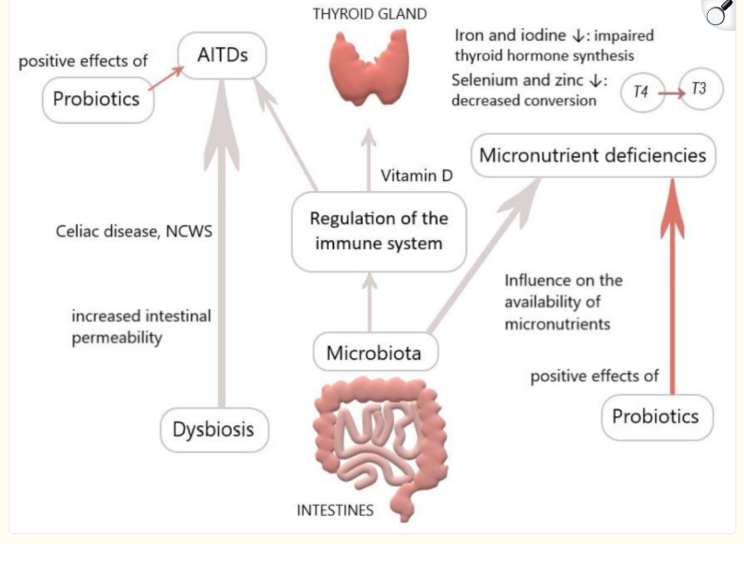
Additionally, Microbiota influence the uptake of minerals relevant to the thyroid gland including iodine, selenium, zinc, and iron. All of them play a role in supporting thyroid function and there is a clear link between thyroid dysfunction and altered levels of these minerals (4). Iodine, iron, and copper are crucial for thyroid hormone synthesis, selenium and zinc are needed for converting T4 to T3, and vitamin D assists in regulating the immune response. Those micronutrients are often found to be deficient in autoimmune thyroid diseases (AITDs), resulting in malfunctioning of the thyroid. (4)
The inflammatory regulation of an impaired microbiota and their negative influence on the immune system seems to be likely to promote autoimmune diseases such as autoimmune thyroid diseases (AITD) (24). Hashimoto’s thyroiditis (HT) is the most common thyroid disorder worldwide with a general prevalence of around 10–12% and is characterized by chronic inflammation, leading to hypothyroidism, and often, destruction of the thyroid gland (25,26). Graves’ disease (GD) is another AITD which has a prevalence of 1–1.5%. It has been proposed that the interaction of genetic predisposition, immune impairment, and environmental factors (i.e. micronutrients, gut microbiota) play an important role in the pathogenesis of these diseases. (4)
Furthermore, intestinal bacteria play a key role in vitamin synthesis (such as vitamin K, folic acid, vitamin B2, B3, B5, B6, B7, and B12 (27,28) digestion of dietary fibers, regulation of the immune response, and mental disorders (4). Heme iron Fe2+, is an important source for both the human and the intestinal microbiota. Studies have reported that iron is essential for bacterial growth and iron availability influences the composition of the microbiota because some bacteria have developed better heme-catching mechanisms. On the other hand, microbiota can increase iron bioavailability in the colon through lowering of pH via the production of short chain fatty acids (4).
Some Bacteria can make siderophores (such as enterobactin) which are high-affinity proteins for iron that acquire Fe3+ (dietary non-heme iron), especially in iron-poor environments. These are chelators that pull iron away from insoluble compounds and move it into a form that bacteria can take up. Humans developed a defense protein called lipocalin-2 to sequester siderophores and limit microbial growth (24,29,30).
Pathogenic strains particularly grow well in heme-rich conditions, due to their efficient heme capturing ability (29). Many enteric gram-negative bacteria, including Salmonella, Shigella, and pathogenic E. coli require iron for their virulence and colonization (31,32). On the other hand, Beneficial commensal gut bacteria from genera Lactobacillus and Bifidobacterium require less or no iron (33). In mice, Constante et al. demonstrated that a heme-rich diet decreases microbial diversity and increases the abundance of Proteobacteria, namely Clostridiales and Lactobacilales.
At this point we should ask – what happens when we pop iron pills?
Well, administration of iron supplements (due to incomplete absorption of around 20%) increases colonic iron, leading to adverse effects and altering the microbiota. In vitro and in vivo studies proposed that through oral iron, the beneficial barrier of commensal gut bacteria is decreased and the abundance of enterobacteria such as enteropathogenic Escherichia coli is increased, implicating gut inflammation (34).
SIBO is a manifestation of gut dysbiosis. SIBO can lead to low iron mainly by reducing iron absorption in the small intestine, where iron is normally taken up. The excess bacteria can inflame or damage the gut lining (intestinal epithelium) where iron absorption occurs, and they can also compete for nutrients, consume iron and B12, so less iron reaches your blood stream. Also, the chronic inflammatory state created by bacterial overgrowth impairs iron absorption even when iron is present. However, if you have active SIBO, the bacterial overgrowth will impair absorption of iron from any source, including your multivitamin.
On the other hand, Iron is essential for efficient iodine utilization and thyroid hormone synthesis. Iron deficiency is a common finding in hypothyroidism and is diagnosed in up to 60% of these patients (35). Iron deficiency could cause thyroid disorders, including impaired thyroid hormone synthesis, storage, and secretion. (4) This is due to decreased oxygen transport or by impairing heme-dependent thyroid peroxidase enzyme despite adequate iodine intake. According to literature, activity of this iron-dependent enzyme – Thyroid iodine peroxidase (TPO) can be negatively affected by iron deficiency, resulting in low thyroid hormone levels in plasma, thus increased TSH secretion and enlarged thyroid (35,36).
Overview of the influence of the gut on the thyroid (Image obtained from Ref 4)
Conclusion
Gut dysbiosis can cause malabsorption of essential micronutrients. Deficiency of these micronutrients like iodine, selenium, iron, and zinc can lead to thyroid dysfunction. Additionally, an alteration in the composition of intestinal bacteria (dysbiosis), a bacterial overgrowth increasing intestinal permeability, and a shift to pro-inflammatory cells are some of the factors of microbial impact on the thyroid.
Hypothyroidism can further put you at a risk of SIBO due to altered GI motility; suggesting that it’s a reciprocal relationship.
If the chronic GI symptoms persist in patients despite taking thyroid medication/treatment, it is prudent to evaluate the possibility of SIBO in patients with hypothyroidism.
References
- Patil AD. Link between hypothyroidism and small intestinal bacterial overgrowth. Indian J Endocrinol Metab. 2014 May;18(3):307-9. doi: 10.4103/2230-8210.131155. PMID: 24944923; PMCID: PMC4056127.
- Wei M, Mehravar S, Leite G, Naji P, Barlow GM, Hosseini A, Rashid M, Sanchez M, Fajardo CM, Pimentel M, Mathur R. Relationship Between Hypothyroidism, Risk of Small Intestinal Bacterial Overgrowth, and Duodenal Microbiome Alterations. J Clin Endocrinol Metab. 2026 Feb 20;111(3):707-720. doi: 10.1210/clinem/dgaf495. PMID: 40908532.
- Yaylali O, Kirac S, Yilmaz M, Akin F, Yuksel D, Demirkan N, Akdag B. Does hypothyroidism affect gastrointestinal motility? Gastroenterol Res Pract. 2009;2009:529802. doi: 10.1155/2009/529802. Epub 2010 Mar 7. PMID: 20224642; PMCID: PMC2833301.
- Knezevic J, Starchl C, Tmava Berisha A, Amrein K. Thyroid-Gut-Axis: How Does the Microbiota Influence Thyroid Function? Nutrients. 2020 Jun 12;12(6):1769. doi: 10.3390/nu12061769. PMID: 32545596; PMCID: PMC7353203.
- Almandoz JP, Gharib H. Hypothyroidism: Etiology, diagnosis, and management. Med Clin North Am. 2012;96:203–21. doi: 10.1016/j.mcna.2012.01.005. [DOI] [PubMed] [Google Scholar]
- Brechmann T, Sperlbaum A, Schmiegel W. Levothyroxine therapy and impaired clearance are the strongest contributors to small intestinal bacterial overgrowth: results of a retrospective cohort study. World J Gastroenterol. 2017;23(5):842‐-852.
- Lauritano EC, Bilotta AL, Gabrielli M, et al. Association between hypothyroidism and small intestinal bacterial overgrowth. J Clin Endocrinol Metab. 2007;92(11):4180‐-4184.
- Hao Y, Xu Y, Ban Y, et al. Efficacy evaluation of probiotics combined with prebiotics in patients with clinical hypothyroidism complicated with small intestinal bacterial overgrowth during the second trimester of pregnancy. Front Cell Infect Microbiol. 2022;12:983027.
- Dukowicz AC, Lacy BE, Levine GM. Small intestinal bacterial overgrowth: A comprehensive review. Gastroenterol Hepatol (N Y) 2007;3:112–22. [PMC free article] [PubMed] [Google Scholar]
- Bohm M, Siwiec RM, Wo JM. Diagnosis and management of small intestinal bacterial overgrowth. Nutr Clin Pract. 2013;28:289–99. doi: 10.1177/0884533613485882. [DOI] [PubMed] [Google Scholar]
- Quigley EM, Quera R. Small intestinal bacterial overgrowth: Roles of antibiotics, prebiotics, and probiotics. Gastroenterology. 2006;130:S78–90. doi: 10.1053/j.gastro.2005.11.046. [DOI] [PubMed] [Google Scholar]
- Pimentel M, Saad RJ, Long MD, Rao SSC. ACG clinical guideline: small intestinal bacterial overgrowth. Am J Gastroenterol. 2020;115(2):165‐-178.
- Leite G, Rezaie A, Mathur R, et al. Defining small intestinal bacterial overgrowth by culture and high throughput sequencing. Clin Gastroenterol Hepatol. 2024;22(2):259‐-270.
- Chiovato L, Magri F, Carlé A. Hypothyroidism in context: where we’ve been and where we’re going. Adv Ther. 2019;36(Suppl 2):47‐-58.
- Mendes D, Alves C, Silverio N, Batel Marques F. Prevalence of undiagnosed hypothyroidism in Europe: a systematic review and meta-analysis. Eur Thyroid J. 2019;8(3):130‐-143.
- Empson M, Flood V, Ma G, Eastman CJ, Mitchell P. Prevalence of thyroid disease in an older Australian population. Intern Med J. 2007;37(7):448‐-455.
- Yalcin MM, Altinova AE, Cavnar B, et al. Is thyroid autoimmunity itself associated with psychological well-being in euthyroid Hashimoto’s thyroiditis? Endocr J. 2017;64(4):425‐-429.
- Melmed S, Auchus RJ, Goldfine AB, Rosen CJ, Kopp PA. William Textbook of Endocrinology. 15th ed. Elsevier; 2024:chap 11.
- Jonderko G, Jonderko K, Marcisz C, Golab T. Gastric emptying in hypothyreosis. Israel Journal of Medical Sciences. 1997;33(3):198–203. [PubMed] [Google Scholar]
- 7.Shafer RB, Prentiss RA, Bond JH. Gastrointestinal transit in thyroid disease. Gastroenterology. 1984;86(5):852–855. [PubMed] [Google Scholar]
- Kahraman H, Kaya N, Demircali A, Bernay I, Tanyeri F. Gastric emptying time in patients with primary hypothyroidism. European Journal of Gastroenterology and Hepatology. 1997;9(9):901–904. doi: 10.1097/00042737-199709000-00014. [DOI] [PubMed] [Google Scholar]
- Gunsar F, Yılmaz S, Bor S, et al. Effect of hypo- and hyperthyroidism on gastric myoelectrical activity. Digestive Diseases and Sciences. 2003;48(4):706–712. doi: 10.1023/a:1022876423487. [DOI] [PubMed] [Google Scholar]
- Lu C-L, Montgomery P, Zou X, Orr WC, Chen JDZ. Gastric myoelectrical activity in patients with cervical spinal cord injury. American Journal of Gastroenterology. 1998;93(12):2391–2396. doi: 10.1111/j.1572-0241.1998.00693.x. [DOI] [PubMed] [Google Scholar]
- Fröhlich E., Wahl R. Microbiota and thyroid interaction in health and disease. Trends Endocrinol. Metab. 2019;30:479–490. doi: 10.1016/j.tem.2019.05.008. [DOI] [PubMed] [Google Scholar]
- Caturegli P., De Remigis A., Rose N.R. Hashimoto thyroiditis: Clinical and diagnostic criteria. Autoimmun. Rev. 2014;13:391–397. doi: 10.1016/j.autrev.2014.01.007. [DOI] [PubMed] [Google Scholar]
- Hiromatsu Y., Satoh H., Amino N. Hashimoto’s thyroiditis: History and future outlook. Hormones. 2013;12:12–18. doi: 10.1007/BF03401282. [DOI] [PubMed] [Google Scholar]
- Fang H., Kang J., Zhang D. Microbial production of vitamin B(12): A review and future perspectives. Microb. Cell Factories. 2017;16:15. doi: 10.1186/s12934-017-0631-y. [DOI] [PMC free article] [PubMed] [Google Scholar]
- Gu Q. Biosynthesis of Vitamins by Probiotic Bacteria. [(accessed on 10 June 2020)]; doi: 10.5772/63117. Available online: [DOI]
- Chieppa M., Giannelli G. Immune cells and microbiota response to iron starvation. Front. Med. 2018;5:5–8. doi: 10.3389/fmed.2018.00109. [DOI] [PMC free article] [PubMed] [Google Scholar]
- Wu W., Song Y., He C., Liu C., Wu R., Fang L., Cong Y., Miao Y., Liu Z. Divalent metal-ion transporter 1 is decreased in intestinal epithelial cells and contributes to the anemia in inflammatory bowel disease. Sci. Rep. 2015;5:1–12. doi: 10.1038/srep16344. [DOI] [PMC free article] [PubMed] [Google Scholar]
- Kortman G.A.M., Raffatellu M., Swinkels D.W., Tjalsma H. Nutritional iron turned inside out: Intestinal stress from a gut microbial perspective. FEMS Microbiol. Rev. 2014;38:1202–1234. doi: 10.1111/1574-6976.12086. [DOI] [PubMed] [Google Scholar]
- Bullen J., Griffiths E., Rogers H., Ward G. Sepsis: The critical role of iron. Microbes Infect. 2000;2:409–415. doi: 10.1016/S1286-4579(00)00326-9. [DOI] [PubMed] [Google Scholar]
- Weinberg E.D. The lactobacillus anomaly: Total iron abstinence. Perspect. Biol. Med. 1997;40:578–583. doi: 10.1353/pbm.1997.0072. [DOI] [PubMed] [Google Scholar]
- Paganini D., Zimmermann M.B. The effects of iron fortification and supplementation on the gut microbiome and diarrhea in infants and children: A review. Am. J. Clin. Nutr. 2017;106:1688S–1693S. doi: 10.3945/ajcn.117.156067. [DOI] [PMC free article] [PubMed] [Google Scholar]
- Kawicka A., Regulska-Ilow B. Metabolic disorders and nutritional status in autoimmune thyroid diseases. Postepy Hig. Med. Dosw. 2015;69:80–90. doi: 10.5604/17322693.1136383. [DOI] [PubMed] [Google Scholar]
- Zimmermann M.B. The influence of iron status on iodine utilization and thyroid function. Annu. Rev. Nutr. 2006;26:367–389. doi: 10.1146/annurev.nutr.26.061505.111236. [DOI] [PubMed] [Google Scholar]